

The Rover
The Missing Scientists
Who were the first people targeted in Iran by the US and Israel? The scientists.
Albert Einstein went into exile in 1933 because Hitler put a bounty on his head. Becoming a scientist can come with risks they don’t teach you in physics class.
What we are witnessing today reads like a science fiction novel. We are currently at 11 high-profile missing scientists working in plasma physics, anti-gravity, nuclear technology, and the cutting-edge metals science required to maintain strength at the most extreme temperatures in our galaxy.
I am going to cover the one I find most interesting — the granddaddy of all missing scientist cases. Neil McCasland.
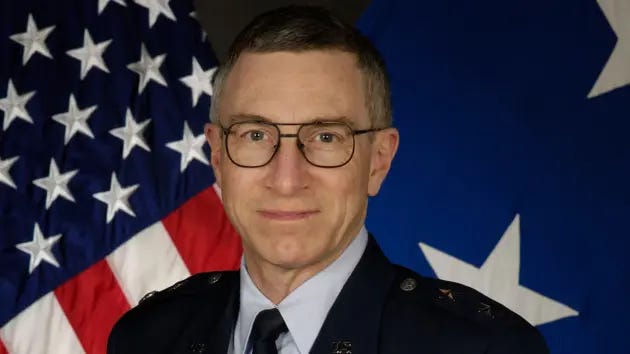
William Neil McCasland is an astronautical engineer, retired United States Air Force major general, and former commander of the Air Force Research Laboratory. Currently the director of technology at Applied Technology Associates.
It was the morning of February 27th, 2026. A repairman was at the McCasland household. Neil had a brief interaction with him around 10am. His wife left for an appointment around 11am. By the time she returned at 12:04pm, Neil McCasland was gone. His phone, glasses, and wearable devices were all left on the table. A red backpack and a .38 revolver were missing. At 3:07pm his wife reported him missing.
The wife also reported that in the weeks prior, the 68 year old McCasland had been dealing with anxiety, lack of sleep, and short-term memory problems. Normal things as you approach 70. In casual conversation, he had mentioned he would rather not live than live with mental decline.
Surveillance cameras sit on both ends of the street. The public was asked to check doorbell cameras throughout the neighborhood. No video footage of McCasland has surfaced. The only physical evidence — an Air Force sweatshirt found one mile from his home.
Who was Neil McCasland? The list of what McCasland hasn’t done might be shorter than what he has:
Bachelor of Science in Astronautical Engineering from the Air Force Academy
Master of Science in Aeronautical Engineering from MIT
PhD in Astronautical Engineering from MIT
Studied at Harvard’s John F. Kennedy School of Government
Ran Kirtland Air Force Base — the hub of 80% of America’s secret programs and classified research. Directed energy, space weapons, dark satellites. If the US is reverse-engineering UFO technology anywhere, it is at Kirtland.
Oversaw research at Wright-Patterson Air Force Research Lab. The home of the Corona, NM crash debris. The same lab where the US reverse-engineered Nazi technology after WWII.
Alleged Majestic 12 member — the secret committee of scientists, military leaders, and government officials formed to investigate and cover up alien spacecraft and extraterrestrial life. Never confirmed by the government.
If there was a reverse-engineering program or contact with extraterrestrial life, McCasland made a career of it. The guy was connected into parts of the government the President may not even know about. Presidents come and go. Guys like McCasland take a lifetime oath. The military doesn't want a one-term President impeding decades of work. And if the President is kept in the dark, playing dumb is always an option if something goes wrong.
McCasland’s wife claimed he only held a normal security clearance since retirement and had no knowledge of UFO remains from Corona (Roswell). But he wasn’t that innocent.
Remember the hacked Hillary Clinton emails WikiLeaks released in 2016? McCasland is in them.
Blink-182 singer contacted Hillary Clinton’s campaign chief to talk UFOs — The Guardian 10/11/2016
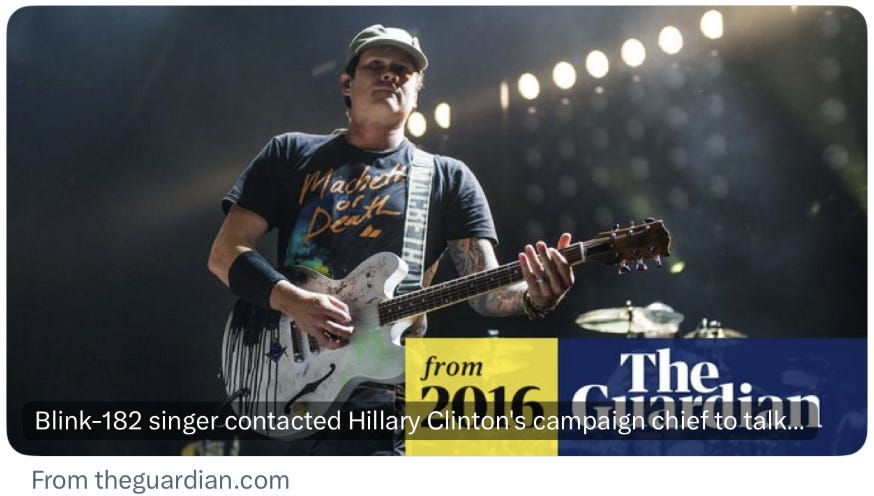
In another email, sent this year, he tells Podesta he has been in touch with a former official involved in the Roswell incident – in which, it is claimed, the US government covered up the its recovery of an alien ship in New Mexico in 1947. The government said it was a weather balloon. DeLonge said he had been in discussions with Maj Gen William McCasland, who had a long career in the US air force, specialising in matters pertaining to space. “He mentioned he’s a ‘skeptic’, he’s not … He just has to say that out loud, but he is very, very aware – as he was in charge of all of the stuff,” DeLonge wrote. “When Roswell crashed, they shipped it to the laboratory at Wright Patterson air force base. Gen McCasland was in charge of that exact laboratory up to a couple years ago.”
McCasland was quietly working with DeLonge on releasing UFO information to the public. His retirement was not as quiet as advertised. He was also part of a consulting firm that mixed private and government research funds. The only time government and private money get mixed is when the government can’t afford to be reported as involved. Sounds like a good reason to make someone disappear and make it look natural.
Especially at a moment when Italian magazine L’Espresso reported that Donald Trump is wrestling to gain oversight of secret agencies — agencies that, as mentioned, do not want oversight. Trump making UFOs a public issue suddenly makes a lot more sense. Presidential oversight needs public support. You build public support by opening the curtain just enough.
The mainstream media (MSM) wants to sell the story that McCasland wandered into the Cibola National Forest in the Sandia Mountains outside Albuquerque and took his own life. But after search parties of 700 people and extensive drone coverage of a national forest frequented by the public, nothing has been found. Not a trace.
My opinion: he is still alive somewhere. The group that took him knows exactly what they are doing. Every camera was evaded. Every tracking device was left behind. Cell phones were factory reset. The gun and backpack were taken to establish motive. Another missing scientist had her toothbrush and hair straightener taken. Again — motive. Not all 11 missing scientists were taken. But the ones that were taken were taken deliberately.
The strangest part of all of this is the story mirrors the plot of a book called The Three-Body Problem by Liu Cixin. One of Barack Obama’s most highly recommended books. There is a story that Eddie Vedder (lead singer of Pearl Jam) and Obama were sitting around a campfire one night. Vedder pushed Obama on the true nature of reality — how the world really works at the highest level. Whether things happen above the President’s head. Obama’s response was simple.
“Read The Three-Body Problem.”
The most interesting things I read this month:
Exxon warns oil inventories will hit dangerously low levels in weeks, forcing prices to shoot higher
Exxon warns oil inventories will hit dangerously low levels in weeks, forcing prices to shoot higher — CNBC
The Strait of Hormuz (SOH) remains closed. For the third month in a row, that is all that matters. The rumored peace deal announced recently hasn’t changed anything yet.

We have been writing about this since March. The warnings have gone from analysts and mainstream media writers to the executive suites of the largest oil companies on the planet. Chevron CEO Mike Wirth (who some could argue is the true leader of the US military) sounded the alarm first about inventories. Now Exxon Senior VP Neil Chapman is telling the world at a conference in New York that we are approaching the tank bottom.
Exxon Mobil warned Thursday that oil inventories will fall to record low levels in coming weeks, forcing prices to spike and curbing demand.
“We’re approaching unheard of inventory levels,” said Exxon Senior Vice President Neil Chapman at a conference hosted by Bernstein in New York.
“I mean really, really low levels,” Chapman warned. “You can debate whether that’s going to hit, those really low levels, in two weeks or three weeks. Once you get to that point, then you’ll see price shoot up.”
The price of physical Brent oil cargoes will spike to $150 to $160 per barrel when inventories hit all-time lows in coming weeks, the executive said. “When the price gets to a certain level, demand destruction brings it back into balance,” he said.
Iran’s closure of the strait has cost the market more than a billion barrels so far, the largest oil supply disruption in history, according to the International Energy Agency. Oil stockpiles have mitigated the impact so far, but that “can’t last forever,” Chapman said
The story of the Strait has always been food and energy. Basic human needs. And the longer the closure pushes on, the more those basic needs get squeezed on supply and pushed up on price. At this point, the Strait will still be under Iranian control on Labor Day. The Iranians are not on the clock. Trump is, as the rumored peace deal is already under threat as of Friday morning.
A deal may be close, but it would not be a peace deal as much as a surrender:

If this is accurate, this would be the greatest strategic loss for the US in history.
I was not alive for Vietnam, but watching Turning Point: The Vietnam War on Netflix, the parallels to Iran are impossible to ignore. The biggest one being the lies told to the American people. It is a sad thing to say out loud, but Iran has been more honest with the American public than our own President. I believed Trump on the first two or three peace deals. Now that we are at 39, it is tough not to feel like we are being played.
In the Netflix series, North Vietnam and the US argued about the shape of the negotiating table for two and a half months. That is a true story. Four sides — the US, South Vietnam, North Vietnam, and the Vietcong — and the communists would not sit down until they felt equal at the table. Sound familiar? Even this morning the deal is reportedly 75% done.
The rapid withdrawal at the end of Vietnam looks closer to reality in Iran every week this drags on. Countries around the world are hurting as food and energy supplies tighten. As we have predicted throughout this war, the longer it went on, the more US Treasury bond selling we would see. And March just saw the largest Treasury sale since 2023.
March Saw the Largest US Treasury Sale since 2023 — Bloomberg
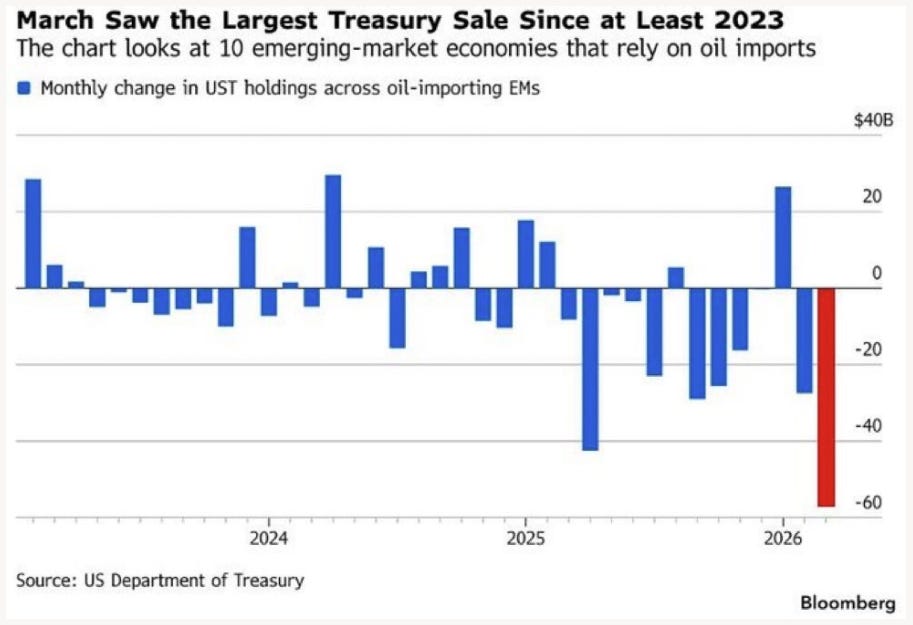
The world needs energy. The world needs food. The world holds a lot of dollars. And right now, the world is selling those dollars to buy what it actually needs. Trump is great at pounding his chest and declaring America will be fine. Maybe it will be. But how great of a world leader are you when you crush your allies’ economies for your war, while China is making its name for itself partnering with countries for the exact opposite reasons?
“Bollocks!” Stacey Abrahams slams the rights redistricting
“Bollocks!” Stacey Abrahams slams the rights redistricting — MS NOW
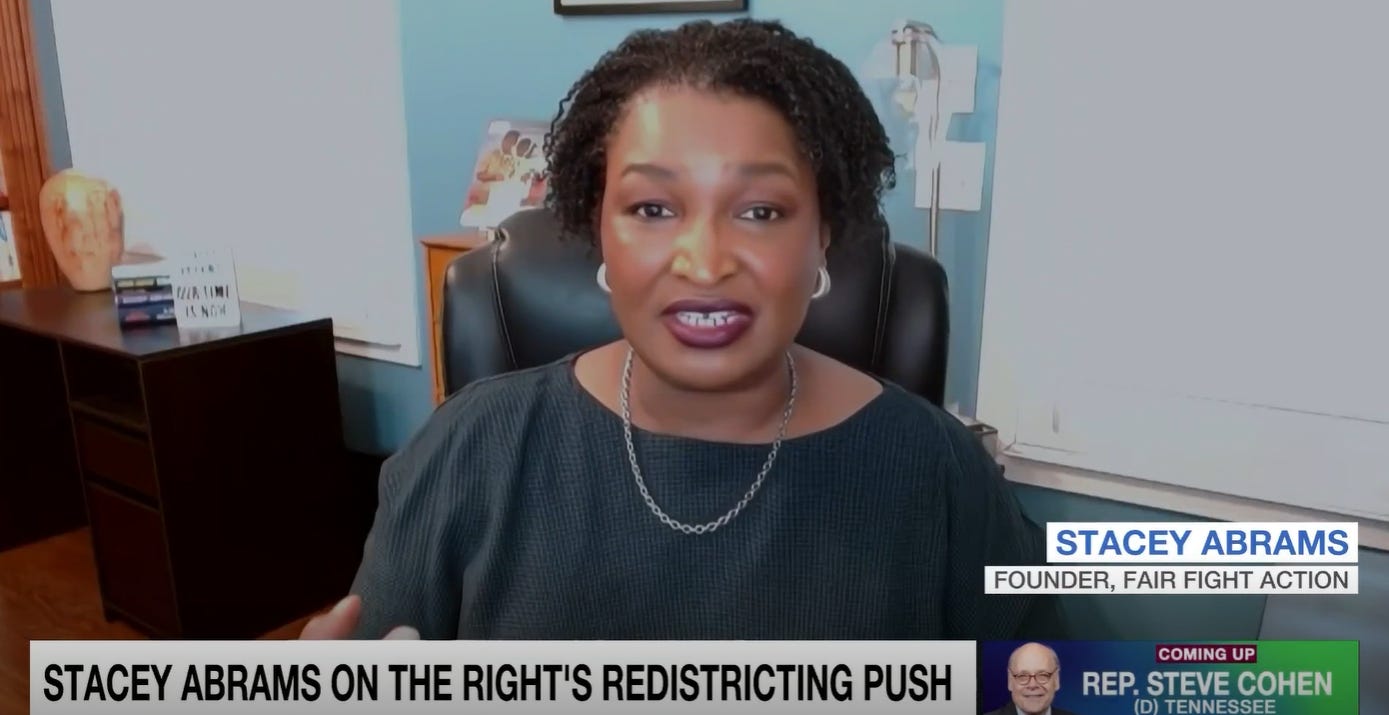
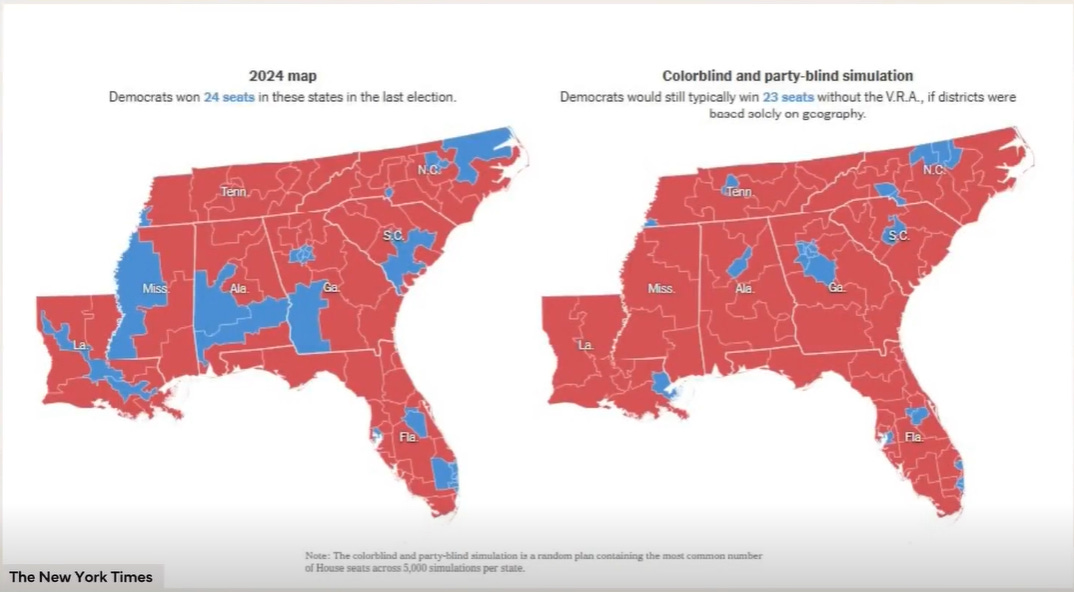
Stacey Abrams was not on my bingo card for 2026, but here we are. And yes… the same Stacey Abrams who got a fresh $2 billion grant from the Biden administration after she lost the Georgia gubernatorial race.
Anyway…since the Iran war began, I could not for the life of me figure out how Trump felt comfortable with any of this Iran business heading into the midterms. This war feels about as unpopular as Vietnam in 1975 — the year Congress denied Gerald Ford additional funding because half of its members had won their seats on an anti-war platform.
I have written in these pages before that whatever you think of Trump, the man has been politically intelligent. The crazy words and posts haven't necessarily translated to crazy actions. Until Iran.
The story Abrams has been screaming about finally answers something I have been wondering for months. The redrawing of district lines across the South could cost Democrats 20 seats in Congress.
Despite Trump's deeply unfavorable political actions, Republicans will still hold Congress.
Political divisiveness will continue to grow as both parties drive toward their own version of socialism. One with state-backed businesses and one with no billionaires.
Beijing Deploys Long-Threatened Economic Arsenal Against U.S. Pressure
Beijing Deploys Long-Threatened Economic Arsenal Against U.S. Pressure — WSJ 5/5/2026
Since the trade war Donald Trump opened in 2018, during his first presidency, Beijing has been quietly building a counter-sanctions arsenal: a blacklist for foreign firms it deems hostile, a law authorizing punishment of any company that helps enforce U.S. sanctions on Chinese targets, a rule ordering Chinese parties to ignore those sanctions outright, and expanded powers for its antitrust regulators to kill cross-border merger deals on national-security grounds.
After the U.S. Treasury sanctioned five small Chinese refineries—the so-called teapots—for buying Iranian crude, China’s Ministry of Commerce activated, for the first time, its blocking rules. The 2021 statute is modeled loosely on the European Union’s 1996 blocking regulation against U.S. extraterritorial sanctions on Iran and Cuba, but the Chinese version has teeth its European model rarely tested.
Under Beijing’s rules, the affected refineries can now sue, in Chinese courts, any counterparty anywhere in the chain that complies with the U.S. sanctions—the bank that refuses the payment, the insurer that declines coverage, the shipowner that won’t carry the cargo.
Compliance with Washington has just become a litigable offense in Beijing. Every multinational touching Chinese oil flows now faces a bilateral liability problem its compliance department wasn’t built to manage.
The biggest thing Americans struggle to understand about China is its culture. China is patient in a way that would make most Americans physically ill. Passive-aggressive to the point of sickening. But the patience pays off.
Xi Jinping watched Trump start the first trade war in 2018 and began building this arsenal that same day. The same way watching Biden freeze Russian assets in 2022 began China's immediate move toward gold. If you don’t hold your assets in dollars, there is nothing to freeze. The pattern never changes — whether an action hurts China or not, defensive policies are implemented immediately to ensure it never happens again. China doesn't wait to see how things play out. China prepares for the next move before the current one is finished.
A company in China can now be sued for complying with Donald Trump's rules. Long threatened since the first trade war. Now it is live.
The next phase of the US-China conflict will be fought with these tools. And this is exactly why the dollar-workaround system that China has been quietly building matters so much. China does not need the dollar to do business. Oil and energy are priced in dollars across the globe, yet China found countries willing to sell outside of it — Russia, Venezuela, and Iran. It is no coincidence that a proxy war is currently happening in two of those locations and a presidential kidnapping in the other.
The real battle right now is not fought with missiles or tariffs. It is contested which currency future commerce is settled in. If that currency is not the dollar, the US is not the global power.
Saudi Arabia $1 trillion sovereign wealth fund opens Shanghai office to “boost China investment ties.”
Saudi PIF opens Shanghai office to boost China investment ties – Bloomberg 5/6/2026
If you are wondering who is and isn’t on our side in the Middle East, I would start by looking at who is opening investment offices in China.
Saudi Arabia’s $1 trillion sovereign wealth fund just opened its first office outside of the kingdom, in Shanghai, to deepen investment ties with China. It’s worth noting that China is already Saudi Arabia’s largest trading partner by a significant margin.
This is a peculiar partnership to watch. The Crown Prince of Saudi Arabia asks Donald Trump for military favors with one hand while investing the proceeds from oil sales in China with the other.
Trust Saudi Arabia if you want. I won’t forget that 15 of the 19 hijackers on 9/11 came from Saudi Arabia. A fact that has been quietly swept under the rug for 25 years.
China to buy at least $17 billion in US agricultural products annually
China to buy at least $17 billion in US agricultural products annually — Reuters 5/14/2026
WASHINGTON, May 17 (Reuters) - China has committed to purchasing at least $17 billion of U.S. agricultural products in 2026, 2027 and 2028, the White House said in a fact sheet released on Sunday.
The commitment was made during meetings between U.S. President Donald Trump and Chinese President Xi Jinping last week, the White House said.
Sometimes I am surprised Donald Trump doesn’t have a shoulder injury from patting himself on the back so much.
After the Xi-Trump meeting last week, the White House announced that China committed to buying $17 billion in US agricultural products annually through 2028. The administration called it a big win for farmers.
Is it?
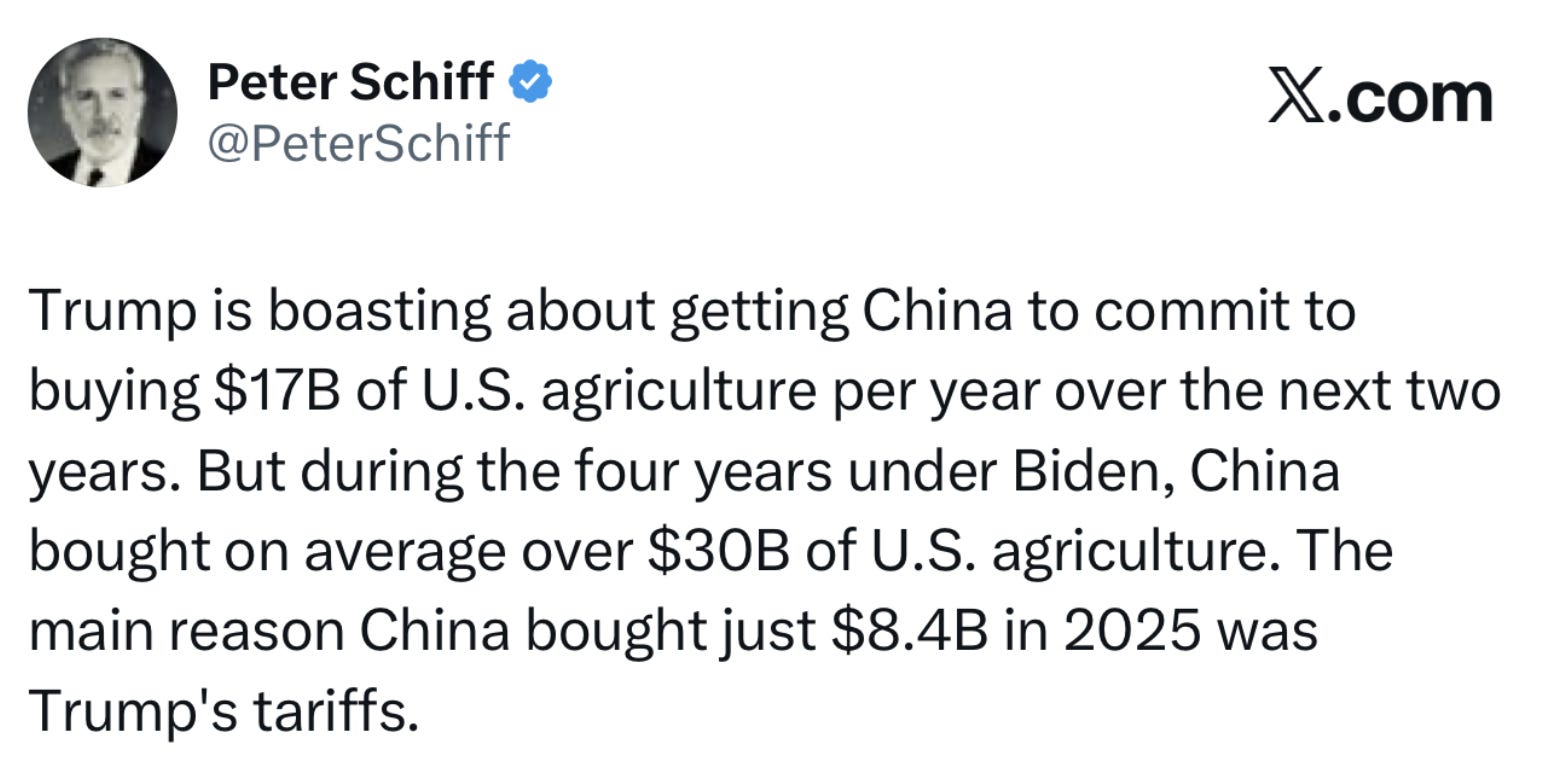
What the White House failed to mention is that $17 billion is still half the agricultural purchase levels under Biden. On top of that, diesel fuel for farm equipment is at its highest price ever. Every farmer that voted for Trump regrets it.
As a Midwest kid who grew up next to corn fields in Minnesota, farming holds a close place in my heart. Most of us from the Midwest come from family farms if you go back two to three generations. From John Deere locking farmers out of their own $600,000 combines with software restrictions to the seed corporations' monopoly, farmers were already hurting before any of this started.
You can ignore farmers hurting as much as you want. But when you complain about grocery prices, ask yourself where food comes from.
My brother-in-law farms a pretty big operation in North Dakota. He was thankful he locked in a fertilizer contract through July before the Strait of Hormuz closed on March 1st. Smart move. But even with fertilizer locked in, fuel prices have been cutting deep into profits. One day of fuel for his operation costs $4,000.
Americans are terrible at thinking ahead, but just because our lives haven’t flipped upside down yet due to supply chain disruptions doesn’t mean it’s not coming. Everything was expensive before Iran. Even if the situation in Iran ends today, fuel and food will continue to get more expensive. I have no idea what Trump was thinking.
Inflation is how the great powers of history have fallen.
The American Rebellion Against AI Is Gaining Steam
The American Rebellion Against AI Is Gaining Steam — WSJ
Americans feel threatened by AI. From jobs to utility bills, we are treating it more as direct competition than a tool for a better future. The mindset is simple — why support something that will take my job and use the energy I need?
The only thing growing faster than the artificial-intelligence industry may be Americans’ negative feelings about it.
In one poll after another in recent weeks, respondents have overwhelmingly voiced concerns about AI, a challenge to claims by industry executives that their technology would gain popularity by improving people’s lives.
Consumers resent energy-price jumps exacerbated by the spread of data centers. Workers fear widespread job losses. Parents worry about AI undermining education and harming children’s mental health. In recent months, the wave of anger has brought protests, swayed election results and spurred isolated acts of violence.
Whether you agree with the pushback or not is not the point.
China could not have written a better ally for the AI war than America’s own citizens. We have written many times in this letter about it, but people like to ignore the obvious — WE ARE IN AN AI WAR WITH CHINA! Do not fight the data centers. Do not fight the policy that allows AI to work alongside us. Support the policy that enables it to succeed for both parties.
AI taking jobs is a real fear, and I don’t think humanity has a clean answer for it right now. But we can produce more energy. The fact that our elected leaders have done nothing meaningful with the energy grid in 25 years is not AI’s fault.
From our April letter:
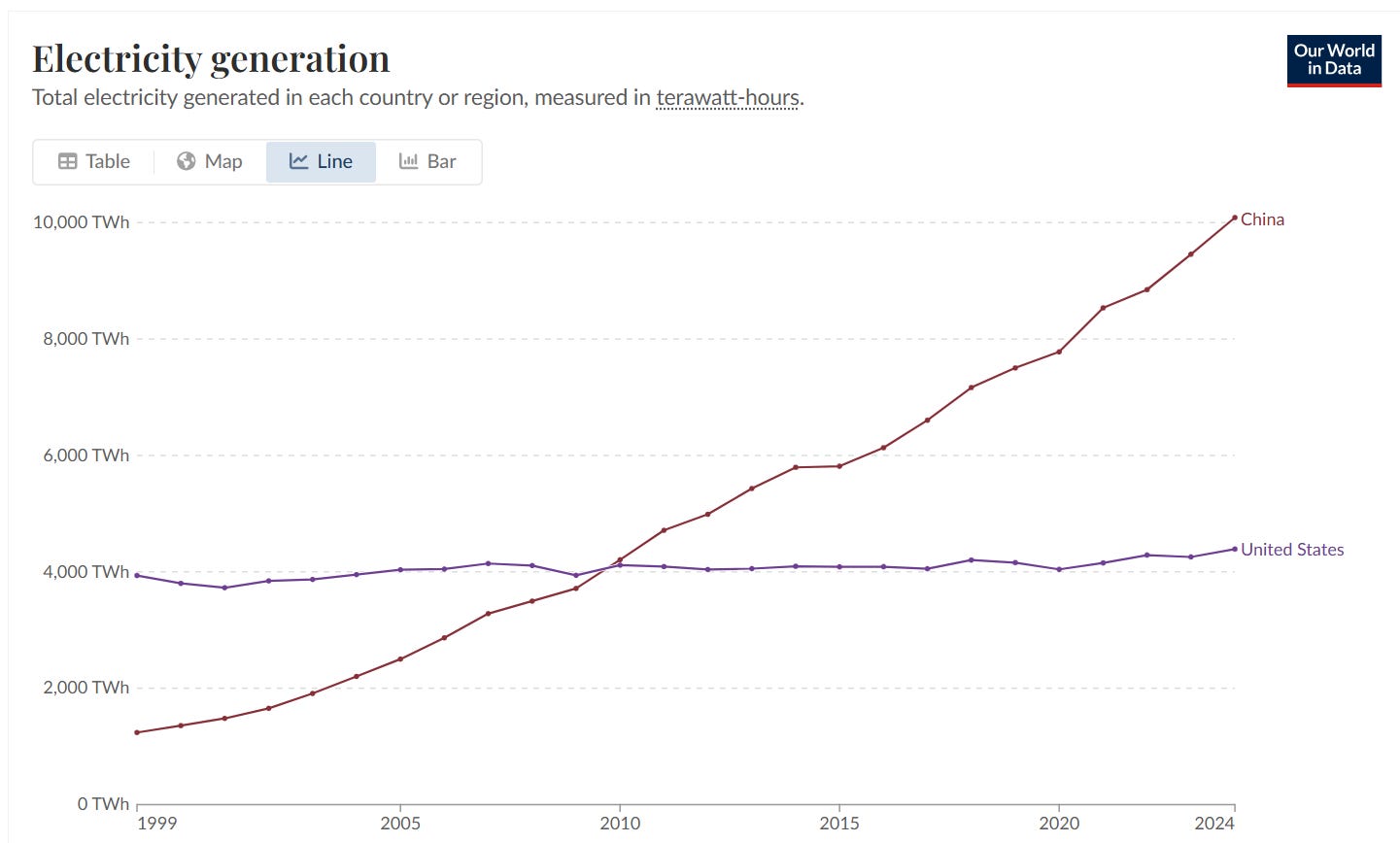
The constraining factor on building data centers is simple: you need an electrical grid capable of powering them. The US has added barely any terawatts to its grid over the last 25 years. You cannot build out AI without massive increases in energy. China has built and added an entire US grid's worth of energy capacity in the last ten years alone.
When your utility bill doubles in a month, it is hard to support the cause. I understand that. But the stakes here are much bigger than personal finances. Losing the AI race to China means China makes everything for the United States going forward — including the weapons our military depends on.
Supporting AI is not optional if the US wants to retain its global position. And it is not optional if you want your lifestyle to stay recognizable. When the UK lost its position as a global superpower, everything in their lives became dramatically more expensive.
Lifestyle
The best minds in history had something we no longer have. It's free. It requires nothing. Quiet time to think.
In the age of the thing in your pocket consuming every free moment, we lost a commodity we never knew we needed. Non-stimulated time to think about what is happening in our lives, the world, and our families.
So many people today just bounce from one thing to the next. You wake up and check a small screen. Go to work and stare at a larger screen. Come home and bounce back and forth between a huge screen and a small screen. Did you even realize this is your day?
This is not how it has always been. Even in the younger years of millennials’ lives, this was not the case. If you wanted to stimulate your brain, you had to do something about it. Today there is so much stimulation coming at you that you have to actively fight to find time to just think.
Think about what? Anything. Your dreams. Your goals. Where is the world going? Is a certain idea correct or incorrect? Are you living a life aligned with who you actually are? Study the ideas of the greatest minds in history and just sit on it for a while. See what comes to you.
Warren Buffett is the greatest investor of all time. But was he really an investor — or a professional thinker? He sits in his office and reads all day. He takes hours to just think. Buffett has made hundreds of billions of dollars doing what most people never make the time for, yet provides huge returns. Simple task, not an easy one. If you think it is easy, put your phone down for one hour at night and see how you do.
Think about being in nature for a week. A chirping bird, a stick breaking, water running — that may be all the noise you hear. Compare that to now, when something is going in your ear 24 hours a day. “I just need background noise while I work.” That is fine. But do you think your brain is operating at full capacity when that is happening? It isn’t.
I challenge you to take time this week to do nothing but think in quiet. And if you try to get out of it by saying you don’t have time — do it in the car. No music. No podcasts. Just drive and think for one week.
Quiet time to think has sharpened my focus when I need it most and given me the space to step back and realign my investments.
Investments
After watching the mania in markets over the last few weeks, if you aren’t scared, you aren’t paying attention. The entire market is being propped up by four companies while the government is telling us it can fund trillion-dollar deficits, build out data centers, bring manufacturing back to the states, fund the Iran War, and roll over existing debt all at the same time without HUGE money printing.
The first cracks in the market calling its bluff are pressuring Trump to make a bad deal with Iran.
