

The Rover
The Trinity Site
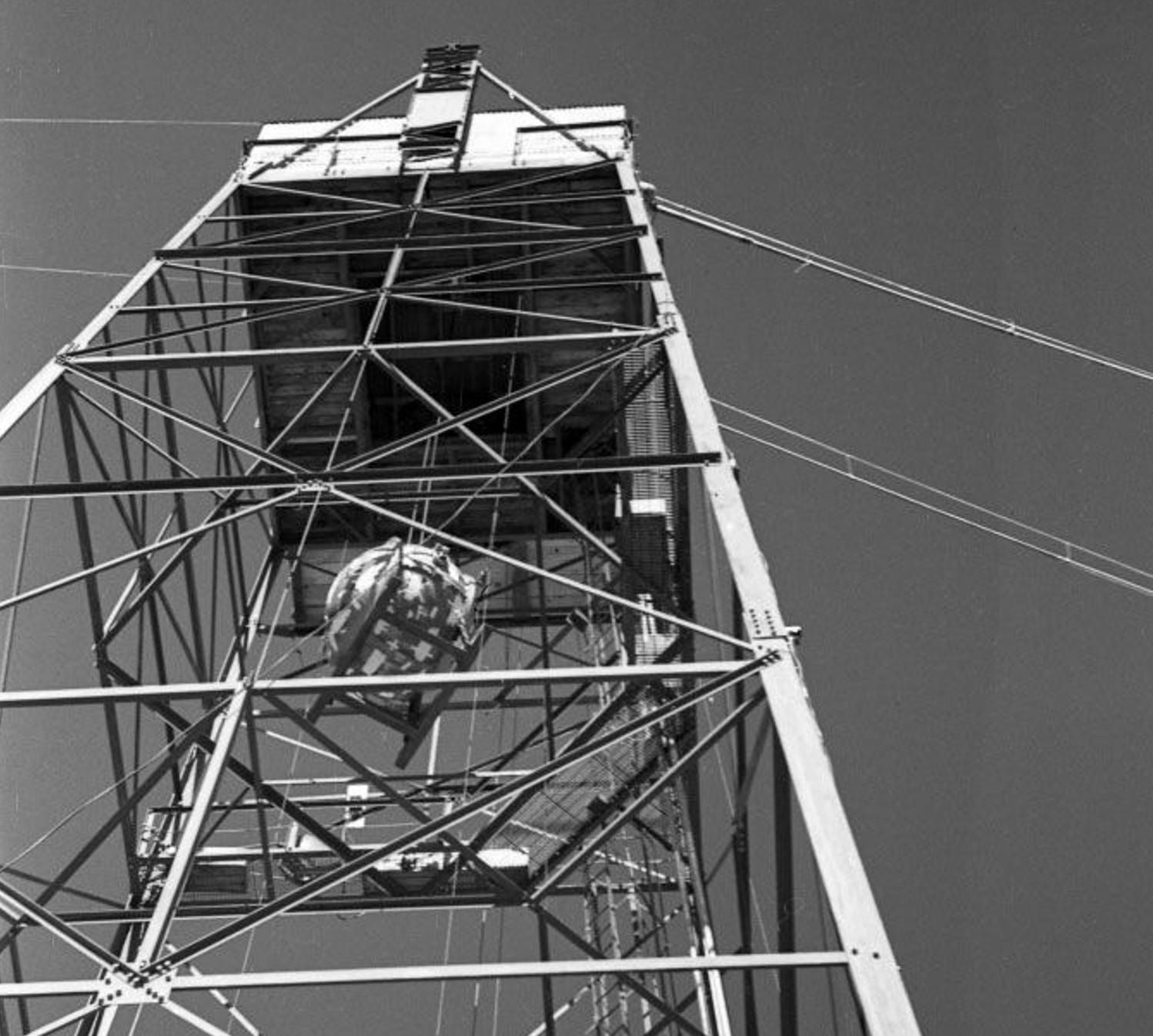
At 5:30 am Mountain War Time, July 16th, 1945, the world would never be the same.
In the remote Jornada del Muerto desert of New Mexico, in the middle of a thunderstorm, the plutonium implosion device known as The Gadget ignited and kicked off a nuclear age nobody was ready for. The brightest scientific minds the world had ever assembled had spent years building it. When it detonated, the Gadget created a 38,000-foot mushroom cloud, vaporized the steel tower it sat on, carved a crater half a mile wide, eight feet deep into the desert floor, and turned the sand beneath it into a green radioactive glass called Trinitite that still lies in the desert today.
The site was chosen for its remoteness and secrecy, aka the middle of nowhere, relatively close to Los Alamos, where the Manhattan Project was led by J. Robert Oppenheimer. Los Alamos still serves as the nation's sole site for producing new plutonium cores for America's nuclear arsenal.
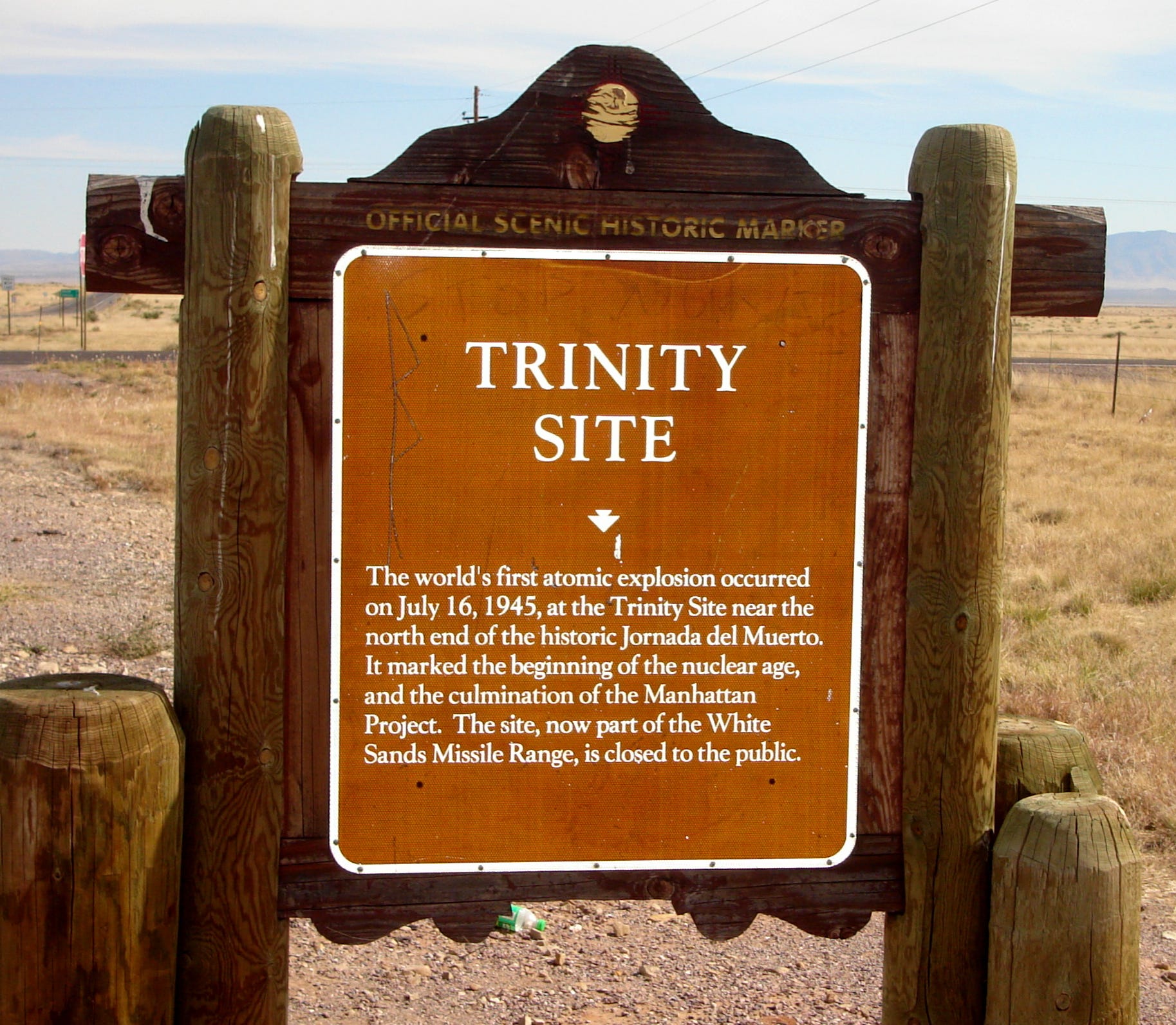
When the world’s first atomic explosion was lauded as a giant success, scientists hugged each other and celebrated. Oppenheimer sat back and realized the world had changed forever. Oppenheimer recalled a quote from Bhagavad Gita: "Now I am become Death, the destroyer of worlds.” Oppenheimer understood what those hugging did not.
After the celebrations subsided, particles floating through the air were just getting started. Radioactive contamination silently rode these particles through the air like a cowboy over a canyon, hitting everyone downwind — downwinders if you will.
On the morning of July 16th, 1945, a thirteen year old girl named Barbara Kent and her fellow dancers were camped near Ruidoso, New Mexico — a small mountain town nestled in the Sierra Blanca range, built around a sawmill and trading post near the noisy Rio Ruidoso river. Today, Ruidoso is an outdoor oasis with elk wandering through town, a popular ski destination, and cool mountain air that draws visitors from across the Southwest.
That morning, the girls were playing in the river when ash began to fall from the sky. What the young girls really thought were warm snowflakes was ash. At that elevation, it is not uncommon to see snowflakes at any time of year, and the girls had no reason to think otherwise. So they did what thirteen year old girls do on a summer morning by a mountain river. They caught the warm flakes with their tongues. They let them land on their faces. They laughed.
All of the girls except Barbara Kent were dead before the age of thirty. Cancer took every one of them.
Kent lived to tell the story. Most of the people downwind of Trinity never knew what had fallen on them, never understood why their bodies began to fail, never connected the warm snow of that July morning to the cancers that followed years later. They simply got sick and died in a small town in New Mexico while the rest of the world celebrated the dawn of a new age.
The downwinder phenomenon did not end at Trinity. Nuclear downwinders are residents of areas across Nevada, Utah, Idaho, and New Mexico who were exposed to radioactive fallout from atmospheric nuclear weapons tests conducted mostly between 1951 and 1962. These individuals developed significantly higher rates of leukemia, thyroid cancer, and breast cancer from involuntary radiation exposure. Nobody asked their permission. Nobody warned them. Nobody told the girls by the river to stay inside.
Before the Trinity test was even complete, components for the first nuclear bomb were already being shipped across the Pacific to Tinian Island. The success of the test gave President Truman the confidence to issue the Potsdam Declaration demanding Japan’s unconditional surrender. When Japan did not surrender, the uranium cores were delivered by the USS Indianapolis right before being sunk by a Japanese submarine.
On August 6th, 1945, the uranium weapon Little Boy was dropped on Hiroshima, and eighty thousand people died immediately. The bomb leveled five square miles. By the end of 1945, the death toll had reached 140,000 from radiation sickness, burns, and fires. Ninety percent of the city’s infrastructure was destroyed, including 42 hospitals, killing most of the medical staff alongside their patients.
The nuclear age that began in a desert in New Mexico gained traction on the ground in Japan. More than 2,000 nuclear tests followed across the world as nations rushed to develop their own weapons. The Cold War was born, and the weapons grew stronger.
Some very large consequences came out of a desolate patch of New Mexico desert. The world hasn’t looked the same since.
The most interesting things I read this month:
An Update on Iran:
Last month, we dove deep into the Iran situation. As of now, not much has changed. Conflicting stories come out every day, negotiations are happening, then they aren't. JD Vance sat on the runway at Joint Base Andrews with a plane full of fuel ready to take off for talks, only to have Iran ghost him entirely. Vance, Kushner, and Witkoff don't know who to talk to. We have blown up the last four groups of Iranian leadership.
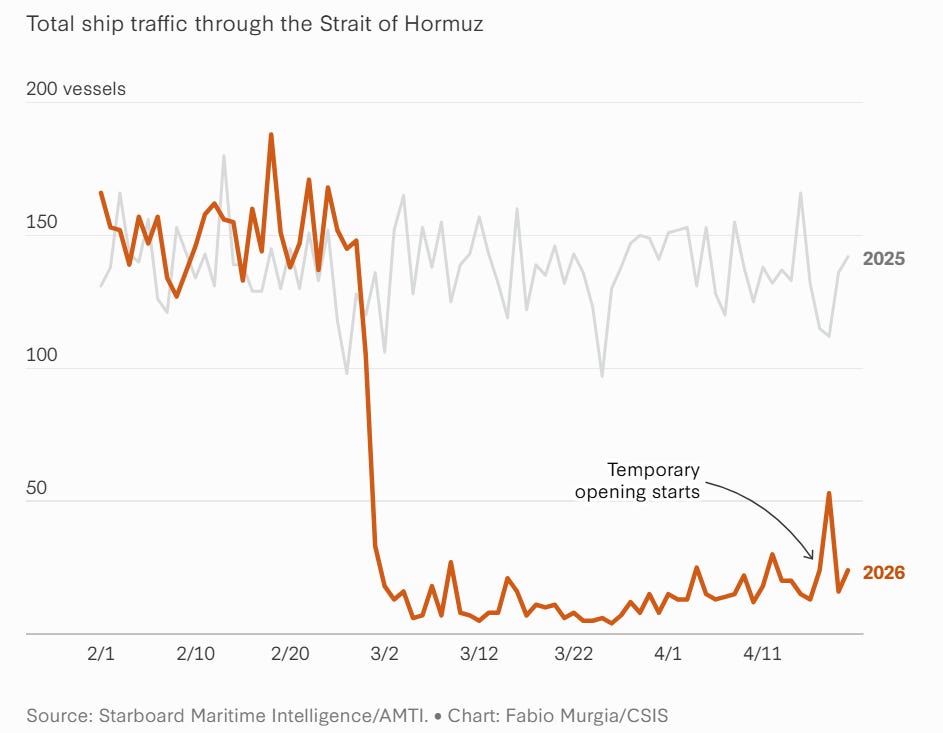
Here is what we know: the Strait of Hormuz is closed. That is all that matters.
Donald Trump told the world on April 18th that the Strait was open. It was not. This two-week excursion is now on week eight with no end in sight. The US military has admitted it could take six months just to clear the underwater mines already laid. And before we could even wrap our minds around that timeline, Iran laid a heavy new round of mines to expose the lie directly.
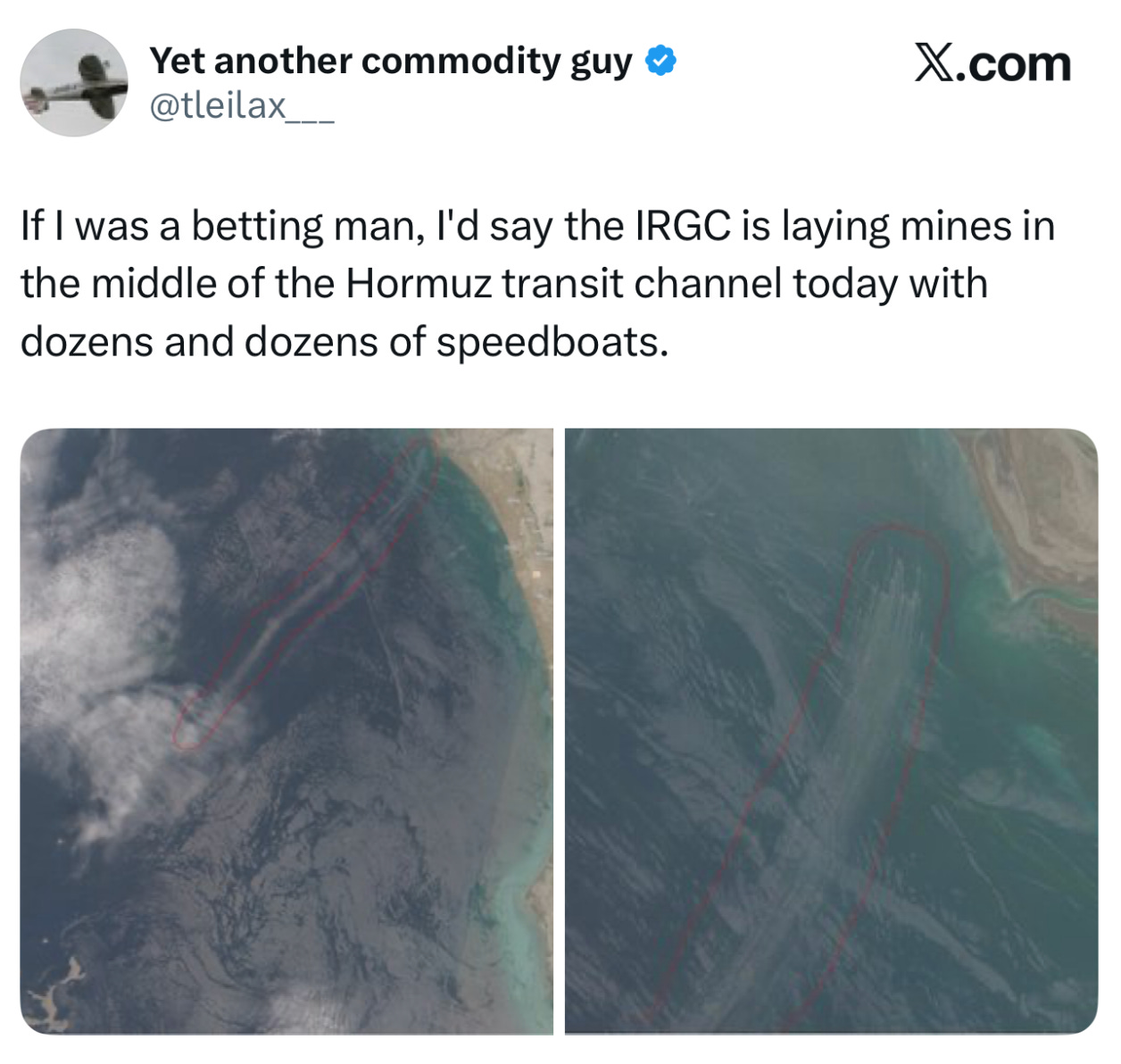
Iran wants the Strait closed, and Iran is calling America's bluff that it can't stay that way. The markets are agreeing with what Trump is lying about saying.
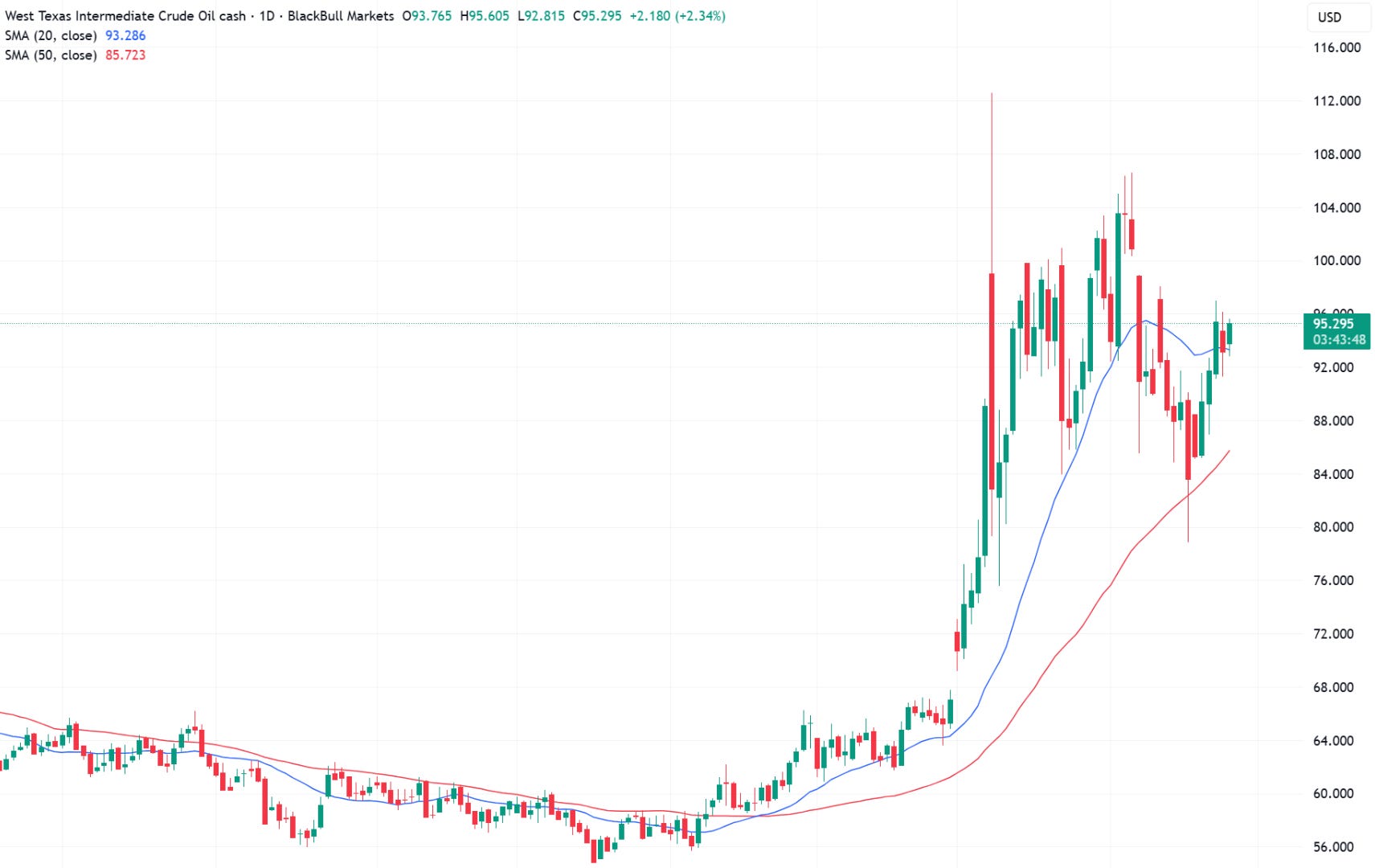
10% of the world's oil supply has been taken offline. 40% of regional refineries have been attacked. Oil is barely higher than it was before the war started. We are facing a larger supply shock than COVID, and markets are at all-time highs. Efficient market theory says the market is always right, yet this is the dumbest market I have ever seen.
And there is a reason for that.
The Financial Times reported that the Trump administration has been in direct communication with large-scale commodities traders to influence oil prices. That is the explanation for what otherwise makes no sense. Bad news comes out, and oil rises 5%, then the faintest hint of progress sends it down 13%. That is not a free market. That is a managed narrative.
Treasury Secretary Scott Bessent and Donald Trump may think they are the smartest guys in the room, but the longer this goes on, the more difficult the narrative becomes to manage. Keeping oil prices from going parabolic buys time and saves face. But actively manipulating commodity prices erodes the one thing that makes American financial markets the envy of the world — trust. Trump already has a “boy who cried wolf” problem, announcing the war is ending, and the Strait is open every two to three days. So when the world stops trusting those words entirely, the true consequences begin. And at that point, Trump will no longer be able to manage the narrative.
I have only touched on oil. This doesn't even account for urea, sulfuric acid, and the broader supply chain collapse quietly accelerating beneath the headlines.

We are on the clock for the Northern Hemisphere growing season. Only half of all farmers were able to secure the fertilizer needed for a successful harvest. Fertilizers feed approximately 4 billion people. With El Niño-driven droughts occurring across the planet, the fertilizers plants need to build strong roots and survive dry conditions simply are not there.
It is no exaggeration to say that one billion people could starve.
If you have not already, you need to stress-test your portfolio assuming the Strait of Hormuz remains closed for the rest of the year. The worst-case scenario, not even a month ago, was the Strait closing through mid-April. We are way past that now with no end in sight.
If things deteriorate from here, this will not be a financial story or a supply chain story.
It will be a civilization story.
Henry Paulson Suggests US Make a Break-Glass Treasuries Plan

The Secretary of the Treasury during the 2008 Global Financial Crisis just issued a stark warning to American authorities — we need a break-glass for Treasuries. You don't call for a break-glass emergency plan unless you see something the rest of Wall Street isn't talking about…
Former Treasury Secretary Henry Paulson called on US authorities to prepare a back-up plan in order to avert a potential collapse in demand for Treasuries — an event that he warned would have “vicious” effects.
“We need an emergency break-the-glass plan, which is targeted and short-term, on the shelf, so it’s ready to go when we hit the wall,” Paulson said in an interview for Bloomberg Television’s Wall Street Week with David Westin.
Paulson said a breakdown in the $31 trillion market for US government debt would be different from the financial crisis he dealt with while at the Treasury’s helm two decades ago.
“As bad as it was,” the government had fiscal firepower to address the credit meltdown, he said. “You can come in and clean up the mess.” But in the event of a US public debt crisis, “when you hit the wall and you’re trying to issue Treasuries and the Fed is the only buyer and the prices of the Treasuries are going down and interest rates are up, that’s a dangerous thing.”
Take note that Paulson said when Treasuries hit the wall, not if.
Paulson was explicit about why this crisis would be different from 2008. During the financial crisis, the government still had fiscal firepower to clean up the mess. A US public debt crisis is a different animal entirely. When you are trying to issue Treasuries and the Fed is the only buyer, with prices falling and rates rising simultaneously, there is no clean-up. There is only damage control.
The fragility Paulson is warning about is already baked into the numbers. All of America's tax revenue from 2025 was spent by the end of March 2026. Everything from here through the end of 2026 is borrowed through Treasury sales, with the promise of paying interest on top of principal. At some point, the countries buying those Treasuries start asking whether that promise is credible. You wouldn't lend someone $100 at 5% interest if you believed they could never pay the $100. That is the calculation other nations are running as I write this.
A true treasury market crisis would trigger:
Interests rate surge
Inflation crisis
Government funding shortfall
Federal Reserve intervention
The consequences from a true Treasury crisis could bring down the entire global financial system and exactly why it would never be allowed to happen, and exactly why Paulson's real question isn't whether we need a plan. It's how much money we'll need to print.
I have been writing since the Iran war began that Iran does not need to beat the US military. Iran just needs to beat the US Treasury market. And as the Strait of Hormuz sits closed, Iran is accomplishing that mission slowly and deliberately.
The Hormuz closure is turning Treasuries buyers into sellers, cutting off American funding sources at the exact moment US deficits are blowing out. The only defense against a wave of countries selling USTs is to offer them something better than selling. A direct line of credit. A swap line.
U.A.E. Asks U.S. About a Wartime Financial Lifeline —WSJ
The United Arab Emirates has opened talks with the U.S. about obtaining a financial backstop in case the Iran war plunges the oil-rich Persian Gulf state into a deeper crisis, U.S. officials said.
U.A.E. Central Bank Gov. Khaled Mohamed Balama raised the idea of a currency-swap line with Treasury Secretary Scott Bessent and Treasury and Federal Reserve officials in meetings in Washington last week, the officials said. The Emiratis emphasized that they had so far avoided the worst economic effects of the conflict but might still need a financial lifeline, the officials said.
Swap lines are typically administered by the Fed, but its 12-person policy committee, the Federal Open Market Committee.
It usually reserves them for relieving severe funding-market pressures that could spill back into the U.S. economy. It has standing arrangements with central banks in the U.K., Canada, Japan, Switzerland and the European Union. During periods of acute stress, most recently in 2020, it extended swap lines to nine other central banks, including in Mexico, South Korea and Brazil. The U.A.E. has fewer ties to U.S. markets than traditional swap recipients.
The United Arab Emirates has opened talks with the US about obtaining a financial backstop in case the Iran war drives the Gulf state into a deeper crisis. The UAE Central Bank Governor raised the idea of a currency swap line with Treasury Secretary Scott Bessent and Federal Reserve officials in Washington last week. The UAE emphasized they had so far avoided the worst economic effects of the conflict but may still need a lifeline.
The WSJ noted that the UAE has fewer ties to US markets than traditional swap line recipients. But what the article buried is the number that matters — the UAE holds $108 billion in US Treasuries. A country facing a dollar shortage doesn't go looking for a swap line as a first resort; it sells Treasuries. That is the fastest and most obvious way to raise dollars in a crisis. The swap line conversation is happening because the US cannot afford to let that selling begin.
The longer the Strait stays closed, the more of these conversations will surface. Bessent will be handing out swap lines to any country on the verge of selling. Not out of generosity, but out of necessity. The US is not offering financial lifelines because it wants to. It is offering them because the alternative is watching the Treasury market unravel in real time.
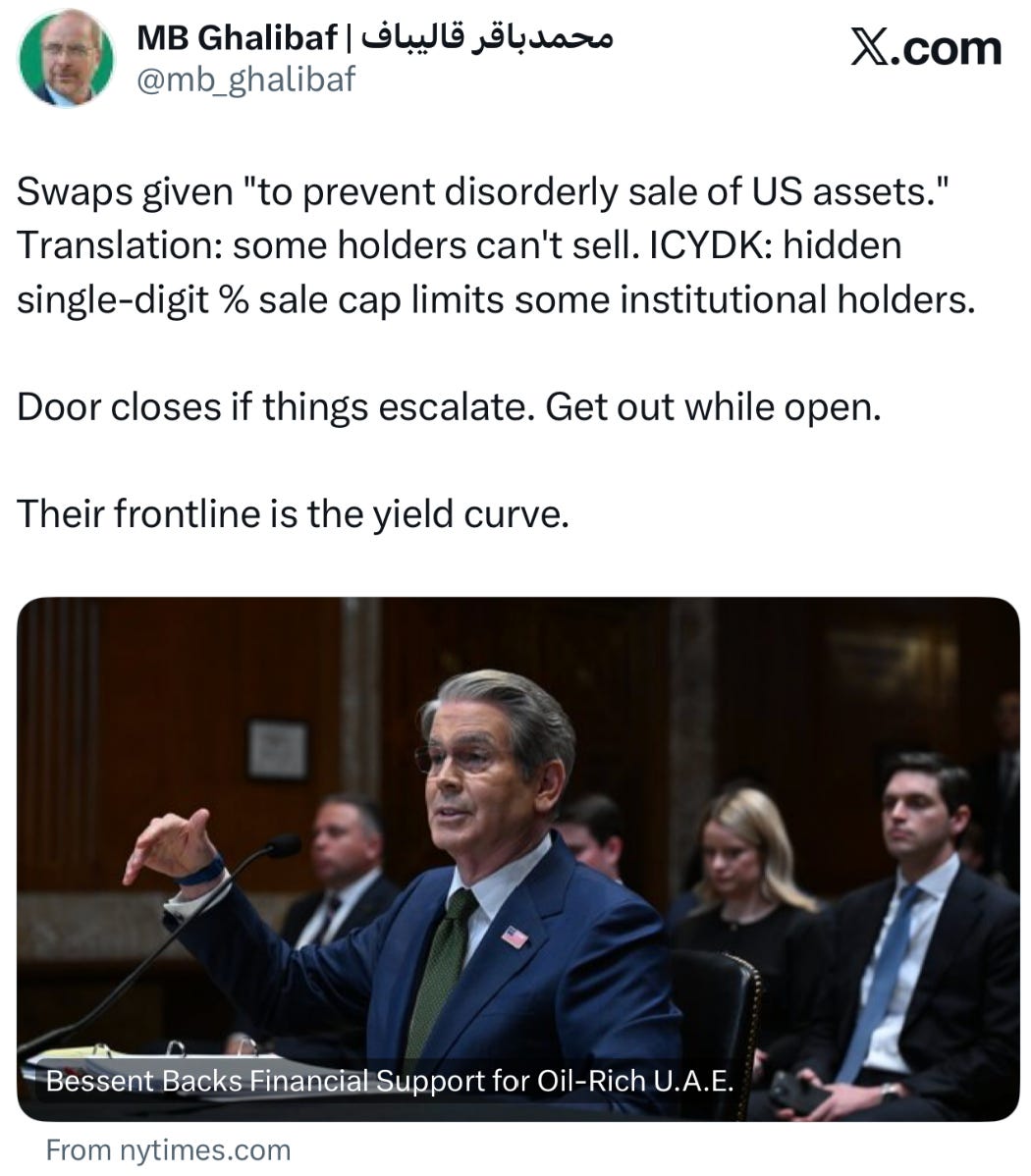
The UST market is in such a fragile state that we are forced to lend in dollars rather than allow anyone to sell freely to raise dollars on their own. If we do not control other countries' actions, we are in trouble. We are throwing stones in a glass house. The world is a drunk driver, and the UST market is the car we are trying to keep between the lines. Iran doesn't need another missile. Every day the Strait stays closed, another country lines up for a swap line, and the car swerves over the centerline.

Chinese Satellites Over Mideast Battlefield Put U.S. on Edge

Since the U.S. and Israel launched attacks against Iran in late February, Chinese satellite imagery of the conflict zone has proliferated—potentially offering battlefield guidance to Tehran and other U.S. adversaries.
U.S. concerns about the use of such data in the Middle East grew after the Chinese artificial-intelligence company MizarVision claimed on social media to have tracked the movements of American aircraft carriers, F-22 stealth fighters and B-52 bombers by using AI to analyze satellite data.
A Pentagon assessment of China’s military power published in December said China-based commercial satellite firms have participated in business exchanges with Iran’s Islamic Revolutionary Guard Corps. The Pentagon didn’t elaborate and it couldn’t be determined whether and how Iran might be using Chinese imagery to guide its military operations.
The capabilities of China’s remote-sensing satellites came into sharper focus after an American satellite operator said it was withholding indefinitely images of the conflict zone in the Middle East in response to a U.S. government request.
Russia and China are 100% helping Iran with the war against the US. Chinese satellites are tracking our every move in real time. Aircraft carriers, battleships, or fighter jets, nobody is safe from eyes that never sleep. While the US government is withholding all images, China is selling them to the Iranian Revolutionary Guard. The US has never faced something like this. It changes everything.
The Mahan Doctrine, developed by US Naval Officer Alfred Thayer Mahan in the late 19th century, has been the bedrock of American defense strategy since World War II. Its core argument is simple — national greatness is inseparable from sea power. Control the oceans, control the commerce, control the world. Build a concentrated battleship navy. Secure overseas bases. Dominate the maritime chokepoints.
What is going on in Iran tells us the Mahan Doctrine is dead.
Iranian missiles are accurate enough to evacuate CIA offices across the Middle East and keep American aircraft carriers 1,000 kilometers away from the battlefield, ending 80 years of strategic assumptions permanently. Sea lanes cannot be managed when the enemy can see everything from space and hit anything from shore. Aircraft carriers are being compared to dinosaurs — expensive, slow, and vulnerable in a world where a $50,000 Iranian missile guided by a Chinese satellite can find a $13 billion ship.
There may not be a clear loser yet. But there are two clear winners, and neither of them is the United States.
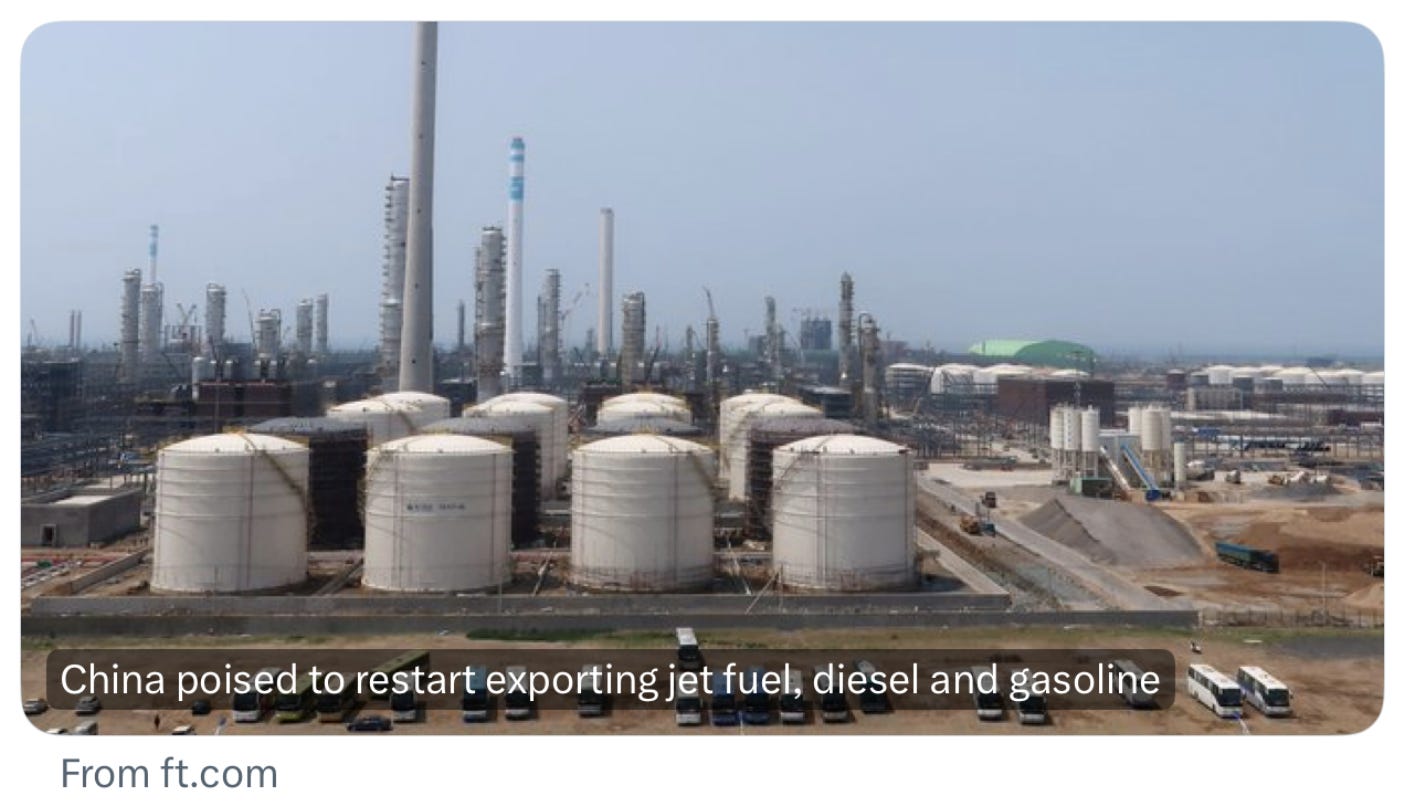
Russia is printing billions of dollars on record oil markets without firing a single shot at America. China is quietly expanding its influence across South Asia while the US burns through interceptors. The best proxy war China and Russia never had to fight is being fought in Iran.
Here is the part the mainstream media is missing. The story has been told from the beginning as America striking Iran to hurt China’s oil supply. Cut off Chinese energy, and you cut off Chinese power. Simple.
So explain this: China is one of the largest oil importers on the planet. And as of April 28th, China is exporting oil to the very region desperate for it (including American allies Japan and South Korea).
How badly are we really hurting them?
America Loses Its Will to Work

China, AI, and reshoring our defense industrial base are not the biggest threats America faces right now. The biggest threat is that people are no longer willing to do what it takes to keep America great. Without the people willing to do laborious jobs, none of the above matters. Bringing manufacturing back to America means nothing if we don’t have the workers willing to do the work.
We now have multiple generations of smart people who went into finance instead of building things. The finance jobs were easier and paid six to seven times more. Who wouldn’t choose Wall Street over designing automobile parts?
In the mid-1990s, politicians and commentators could still speak of America’s work ethic without apology. In the 2020s, America’s cognoscenti constantly suggest something baneful in the bourgeois idea that gainful toil is virtuous—movies romanticizing manipulated workers and vilifying rapacious corporate executives; intellectuals contending that the five-day, 40-hour work week abuses wage laborers; academics suggesting terms like “work ethic” are racist; journalists ready to portray every worker-management relationship as exploitative.
The constant brainwashing that work should be optional is starting to show its face in the numbers. COVID amplified these mindsets exponentially when people were paid double to sit at home and do nothing. As social welfare budgets grow to historic levels and people are applauded for opting out, this doesn't end well for a society.
Evidence abounds that many Americans no longer consider gainful work a natural and necessary part of life. The sudden explosion of online sports betting bespeaks a nation of young men seeking ways to pocket cash without doing any work. Pandemic-era measures that kept able-bodied men in their homes, bored and looking for ways to pocket a few bucks, enhanced the attractiveness of wagering on games. Americans bet $5 billion on sports in 2018. In 2024 they bet $150 billion. The sports-betting phenomenon reveals, if nothing else, the loss of any notion that income should bear some relation to a product or service rendered. The bettor produces no product or service for his winnings.
Ponder also the sudden ubiquity of advertisements for personal-injury law firms that promise to get their clients ample reward for damages. All over the country one encounters them on television, radio and billboards, with phone numbers leading to call centers that weed out weak claims. Have so many people really suffered bodily injury?
About 1 in 7 Americans 18 to 24, according to a recent Rand study, are neither working nor looking for work. Many young people support a “universal basic income”—a government payment to every American, regardless of income or employment status.
The COVID shutdowns left wounds that are still bleeding. The public used COVID as an excuse not to work and exploit the government for money. The problem is that money comes from working Americans. At some point, the people holding up the floor run out of strength.
We are now at an inflection point in our fight to maintain our position at the top of the global food chain. Keeping it is going to take hard work and determination. The American public does not seem to care. If you asked ten Americans to work 60-hour weeks to ensure America stays the most powerful country in the world, two might volunteer. If you asked the same of ten Chinese people, all ten would do it without hesitation.

Above is the largest disconnect nobody in Washington wants to talk about.
The ones who believe AI will create new jobs to replace the ones it destroys, fine. But what technical job does someone who takes orders at a fast food counter transition into during the AI revolution? Someone working 25 hours a week is not going to go string high voltage cable in the heat, grinding out 60-hour weeks. That gap does not close on optimism.
If America doesn’t win the AI war, fix the grid, and reshore the industrial base, all of which require hard, physical, unglamorous work, our standard of living will decrease. And then you do the hard jobs anyway, for a lot less money, with higher prices for everything you enjoy in your life right now.
The politicians won’t tell you this. Nobody wins an election by telling people they need to work harder. People are too used to waiting with their hand out. But the countries competing against us are not waiting for anything.
Lifestyle
For most of my years on Earth, sleep ranked at the bottom of my priority list. I had the full “I’ll sleep when I’m dead” mentality and lived it out completely. A good time always won. Drinks, staying out late, running on empty — that was just normal. Even on work nights, I’d watch TV in bed until 10:30 or 11 and be up at 5 am without thinking twice. When you’re sleep deprived 90% of the time, you adapt and keep moving. You don’t realize what you’re losing because you never had anything to compare it to.
Over the last couple of months, I made sleep a real priority for the first time. The results have been more dramatic than I expected. I feel better, I’m losing weight faster, and the quality of every day has gone up — especially the mornings, and I am not a morning person.
The changes I made were not dramatic. No alcohol during the week, and if I drink, no more than one night. Bed at 8 pm. I know that sounds like something nobody actually does, but it works because I still get to watch TV in bed. Some nights I’m out by 8:15. Some nights I’m up until 9. Either way, I’m consistently getting close to eight hours.
Eight hours is the target. I know Elon Musk brags about running on six, but he’s also a psychopath and visibly deteriorating in real time, which is exactly what the research would predict for someone his age running a chronic sleep deficit. Shoot for eight hours.
Two supplements have helped me get there: magnesium and glycine. Both are natural, cheap, and up to 50% of American adults are deficient in magnesium alone. A direct consequence of modern farming stripping nutrients from the soil. Message me if you want specific supplement recommendations.
I’m sharing this now because of a study I came across that stopped me in my tracks. A December 2025 study published in SLEEP Advances by Oregon Health & Science University found that insufficient sleep outweighed the effects of diet, exercise, smoking, and loneliness as drivers of reduced life expectancy. Do not compete with them, but outweigh them. Sleep also activates the brain’s drainage system, clearing the proteins associated with Alzheimer’s disease at twice the rate of waking hours. A Mayo Clinic study found that just four hours of sleep deprivation increases fat storage and accelerates aging of the heart’s blood vessels.
Take your sleep seriously. It is the highest return investment you are not making.
Investments:
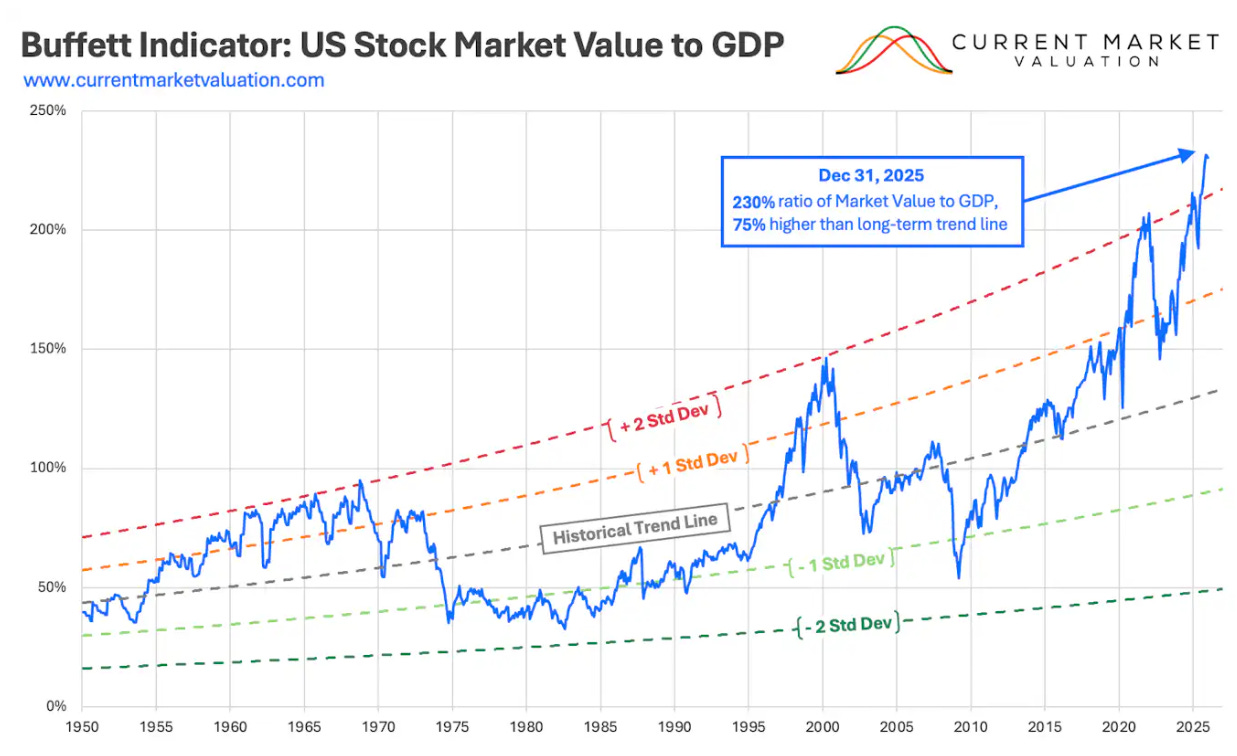
The Buffett Indicator, or yardstick, is one of the most widely used metrics for evaluating how expensive the stock market is. The indicator is the ratio of stock market capitalization to GDP. What began in a 2001 Fortune magazine interview is now the go-to metric for stock market valuation. It’s not 100% perfect, but what is?
As you can see, 2026 has broken out to be the most expensive stock market we have ever seen. Higher than the Roaring 20s and the dot-com bubble. Currently, the indicator sits at 230%, well above the dot-com bubble peak of 146%. We are truly in uncharted territory.
Let me put this bluntly — if you don’t really know what you are doing, what you are buying, and why you are buying it, you shouldn’t be buying stocks.
401k
I gave a full breakdown of my 401k last month.
