

The Rover
Netflix does it again.

FreeFall is the second documentary about Boeing since the 737 Max crisis. What struck me watching it is that this movie is less about Boeing than it is about America.
Airplane safety became secondary to stock price, financial engineering, and CEO bonuses. Another entry in the long story of how everything in America has been financialized. Including the planes flying tens of thousands of feet over our heads at 600 miles an hour.
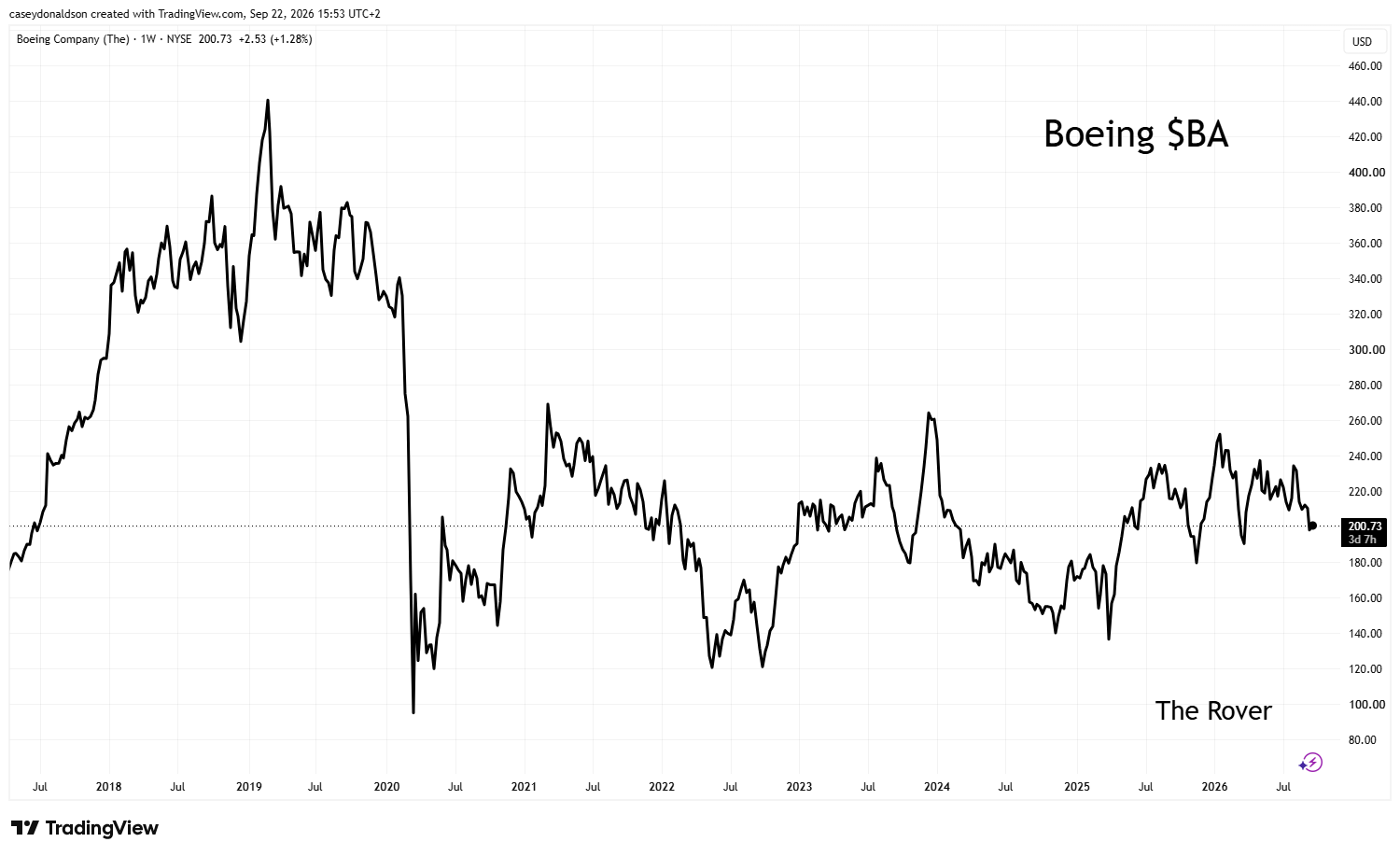
Boeing began falling behind Airbus. Aircraft deliveries, market share, and stock price all reflected it. Boeing needed something new. Their answer was the 737 Max — literally the same airplane as the original 737, fitted with new, more fuel-efficient engines. 346 people died for greener engines and CEO bonuses.
Rather than design a genuinely new aircraft, Boeing chose the cheaper path. The development budget for a clean sheet airplane was estimated at $10 to $12 billion. The re-engine approach was sold internally as a fraction of that cost. Jim McNerney would look like a hero on Wall Street by keeping costs down and padding the bottom line. Cutting production costs can be smart business. But maybe not on airplanes.
To hit those targets, you don't build the 737 Max in Seattle and assemble it down the street. The plan was to build components across roughly 20 countries—Japan, China, South Korea, France, Vietnam, India — and assemble them at a brand-new Boeing plant in South Carolina.
The Boeing plant in Seattle was one of America’s darling manufacturing operations, and still is to some extent. At its peak, it employed tens of thousands of workers and provided good middle-class jobs for thousands of families. But as we have watched repeatedly since China entered the WTO in 2001, middle-income jobs do not survive when CEO bonuses depend on cutting them. The cost of living in Charleston was lower than in Seattle. Lower wages were permissible. The math worked on paper.
Parts from around the world arrived in South Carolina, where newly hired workers tried to assemble pieces that didn't fit together quite right. Quality engineers raised red flags. They were told to shut the fuck up. Delivery deadlines mattered more than keeping the fuselage together.
The two fatal crashes — Indonesia in October 2018 and Ethiopia in March 2019 — resulted from all of the above. Budget pressure to make the financials look better. Outsourced manufacturing that eliminated good jobs and introduced quality problems. Internal warnings were covered up to meet delivery dates. Corporate profit drove the 737 Max program at every decision point, every time.
One thing all Boeing CEOs since the early 2000s have in common is that they came up under Jack Welch, longtime GE CEO, whom some call the greatest CEO in American history. I would call him one of the architects of America's financialization.
The Welch playbook:
Cut costs over quality.
Fire the bottom 10% of performers every year regardless of context.
Offshore and outsource everything that can be moved to boost margins.
The incredible run in GE’s stock price made Welch look like a genius, while he quietly undermined the foundation of American manufacturing and led the charge to eliminate the middle class. Boeing followed that playbook precisely in producing the 737 Max. 346 people are dead while the CEOs walked away with hundreds of millions of dollars in compensation. The stock crashed, and nobody went to prison.
This is the story of America. The jobs that paid real wages to real people were outsourced. Corporate profits were prioritized over safety. People died, and the people responsible got rich.
FreeFall is about Boeing. But Boeing is just the most visible chapter in a much longer book about America.
Manufacturing is hard. It takes hundreds of hours of engineering to produce one small part. It will take over a decade to bring anything meaningful back ot the U.S. now that we lost it. Especially in rare-earth refining. This is no easy task in presidential four-year terms. More on this later.

It’s really fun when your loved ones watch these shows coming from a guy who averages 50 flights a year for the last decade…
The most interesting things I’ve read this month:
The U.S. is Burning Through Its Supply of Interceptors to Counter Iran’s Attacks
Osama Bin Laden: Mission Accomplished
BESSENT SAYS THE IRON DOME WON’T MATTER IF CHINA WINS THE AI RACE
MBS Urged Trump Twice to Strike Houthis Amid Red Sea Threat
Rivals Altman and Musk Rally Behind Dario Amodei’s Calls for AI Slowdown
Bessent Says the U.S. Can Grow Its Way Out of the Debt Crunch. What Would It Take
Hedge Funds Are the Wild Card in the Turbulent Bond Market
Russia Is Churning Out Smart, Cheap New Weapons Faster Than Ukraine or the U.S.
Debris Found in Yemen Suggests Saudi Arabia Fired Its First Chinese Missile
See How the U.S. Is Attacking China’s Control of Critical Minerals
1. The U.S. Is Burning Through Its Supply of Interceptors to Counter Iran’s Attacks
The U.S. Is Burning Through Its Supply of Interceptors to Counter Iran’s Attacks — WSJ 09/15/2026
The U.S. military fired up to 70 or more of its high-end air defense interceptors last week when Iran launched a missile attack on Jordan, U.S. and regional officials familiar with the matter said, a heavy expenditure that underscores Iran’s improved ability to target U.S. forces and challenge American air defenses.
U.S. forces fired 60 to 70 Patriot interceptors to counter the attack, which consisted of about 20 ballistic missiles, some of the officials said. The U.S. also fired more than a dozen Thaad interceptors, one of the officials said. The expenditure is about what the U.S. has used in a full week at other times in the war, another of the officials said.
The exchanges showed how air-defense math can favor the attacker and how Iran has adapted its attacks to force the U.S. to burn precious munitions.
The nature of the attack made it more difficult to counter. Iran targeted American troops with warheads that separate into more numerous projectiles as they close in on their target, the officials said.
The defenses didn’t stop everything. While no troops were killed in the attack last week, Iran managed to hit jet fighters and other aircraft at the Muwaffaq Salti Air Base in Jordan, one of the officials said.
You are always told to avoid politics at family gatherings, but that didn’t happen for us over Labor Day.
We were at a 90th birthday party when a family friend started weighing in on the Iran War. I will call the family friend Bob. Bob is a staunch Fox News watcher, but also a successful guy. Part owner of a heavy civil construction company. Not struggling financially in any way. Bob was outright laughing at the possibility of the US having munitions shortages.
This newsletter has reported on munitions shortages nearly every month since the conflict began. The article above describes the US burning through 60 to 70 Patriot interceptors. Plus THAAD rounds just to counter 20 Iranian missiles. And Iran still got through. But that is beside the point.
This conversation told me that roughly half the country has no idea what is actually happening in the Middle East. They smile and nod along at what Jesse Watters and Laura Ingraham tell them every night, then go back to their chicken wings and Miller Lite.
Iran's entire strategy is captured in two sentences
U.S. forces fired 60 to 70 Patriot interceptors to counter the attack, which consisted of about 20 ballistic missiles.
The exchanges showed how air-defense math can favor the attacker and how Iran has adapted its attacks to force the U.S. to burn precious munitions.
Iran knows it can build missiles faster than America can build interceptors. All Iran has to do is keep firing until the math runs out. Fourth-grade arithmetic shows this is unsustainable. But half the country still believes:
We have no munitions shortages.
We are winning in Iran.
The Strait of Hormuz is open.
We could win tomorrow if we actually wanted to.
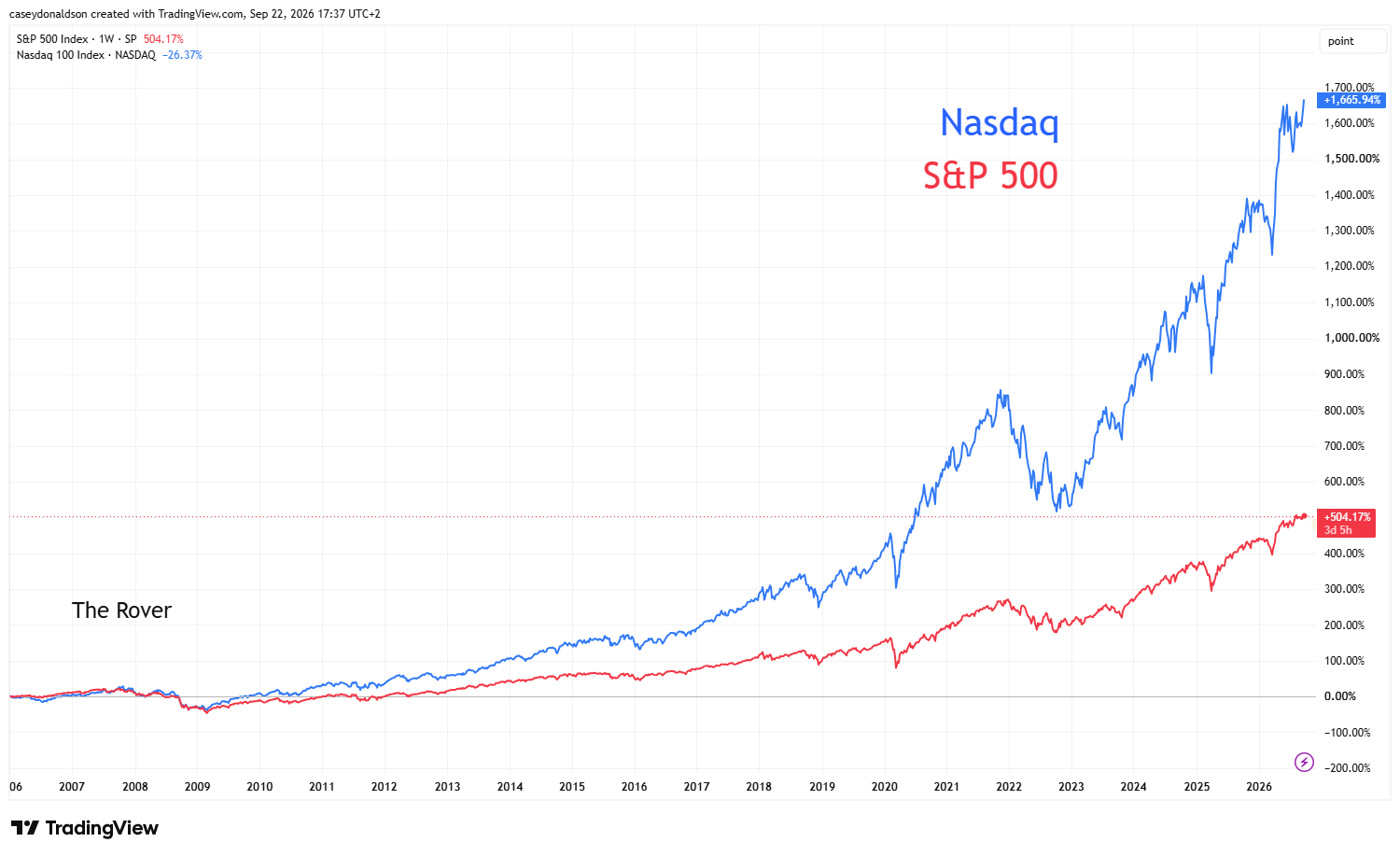
The only way that changes is when the loss becomes so public and so embarrassing that the pain translates directly into financial markets. By then it will be too late to position for it.
What does this chart look like when Fox News reports those four points above are false?
Bob had a follow-up idea before the conversation was cut short for obvious reasons: Why can’t we just bomb everything coming in and out of Iran on land?
Besides the resources it takes to do that with dwindling munitions, the logistical challenges, and civilian (children) casualties that turn entire generations into “Death to America” chanters. Iran has been smuggling goods in and out of the country for forty years. There aren’t a few routes like I-35 with goods transacting back and forth. They built these routes to avoid detection.
The largest railroad in Iran runs to the one country Donald Trump isn’t dumb enough to mess with. China. The moment American forces start hitting supply lines, this conflict escalates toward WWIII faster than any press conference can manage. Ukraine hit a Russia-Iran supply line on the Caspian Sea, and the world held its breath for a minute.
Countries that are not involved get involved quickly when their supply lines are threatened. Reminder: the U.S. wasn't involved in WWII until it cut off Japan’s oil supply line.
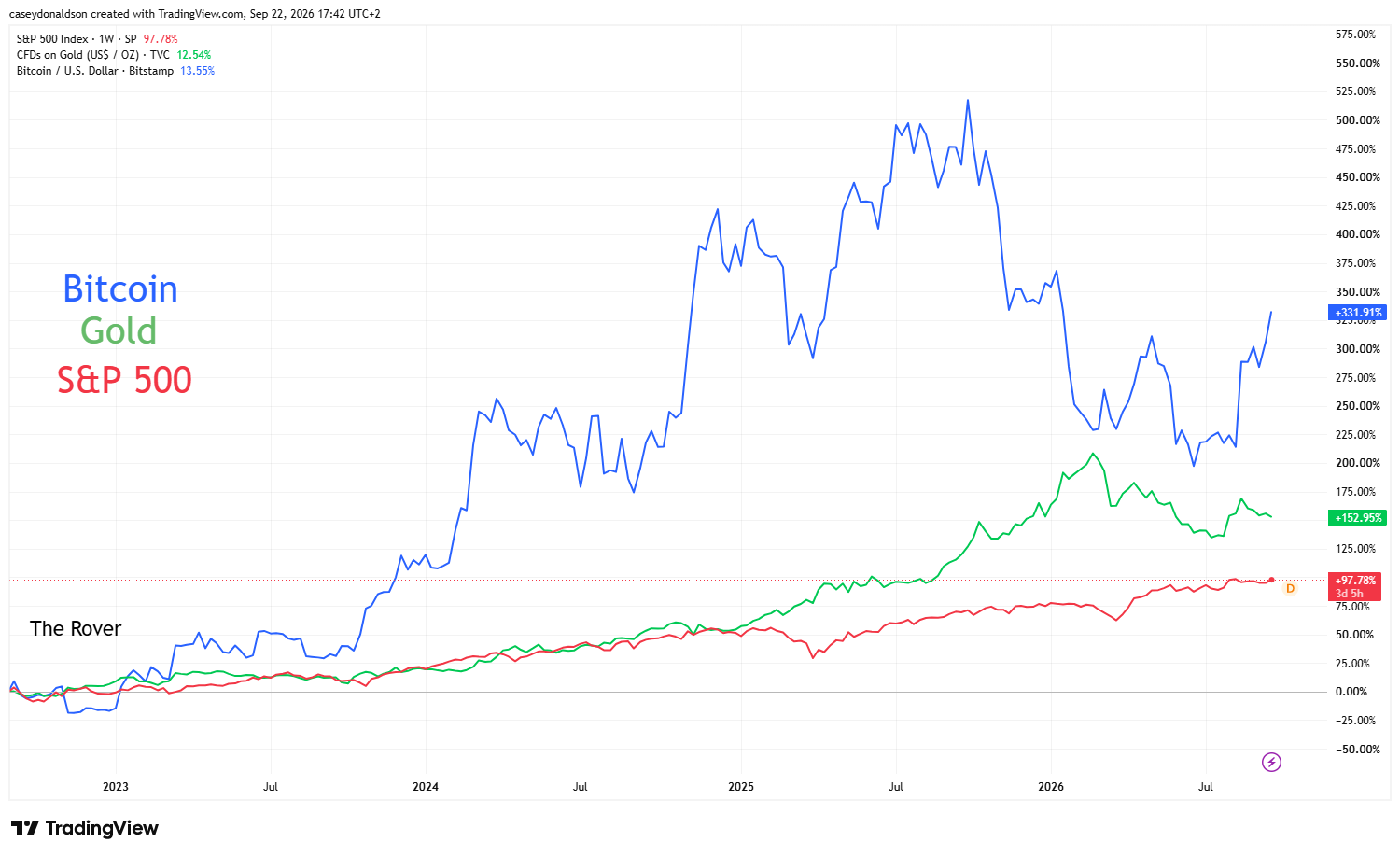
When the Fox News consensus finally figures out what is actually happening in the Middle East, it will be too late. Markets will be shocked. The question is whether your investments are positioned for that moment. The market has begun to sniff this out over the last three years, with Gold and Bitcoin outperforming the SPX.
Russia is sharing intelligence with Iran. You can be certain of it. The US has been doing the same for Ukraine since day one.
If the Bobs of the world don’t want to believe me, maybe they will believe Zelenskyy as he admits the West can’t produce interceptors fast enough.

Time will tell.
