

The Rover
Apocalyptic Tourism

In late August, we took a trip to Colorado for a wedding — Estes Park, Boulder, and a night in Denver before flying out. It was one of those trips that hits you with reality over the head that you had only been reading about.
In a 24-hour period, we went from elk running across a parking lot in the Rocky Mountains to shantytowns of people living in their vehicles in front of brand-new apartment buildings. If you haven't been to a deep blue big city in a while, I wouldn't rush. Not out of politics, but out of wanting not to fear for your safety.
We started the weekend in Estes Park. A large tourist area with good restaurants, cool mountain town history, and the Stanley Hotel looking over the city. The Stanley inspired The Shining. It looks exactly like the kind of place where haunted, scary shit happens. Beautiful, eerie, and completely removed from reality.

Boulder and Denver are where reality hit me over the head. Earlier this year, I read a book by Peter Turchin called “End Times.” The title sums it up, but it’s really about what gets you to have people start hating each other. The book tries to answer the question: why do the Charlie Kirk and UnitedHealthcare CEO shootings happen?

End Times: Elites, Counter-Elites, and the Path of Political Disintegration by Peter Turchin is a 2023 non-fiction book that applies cliodynamics—an interdisciplinary science combining history, mathematical modeling, and sociology—to explain why modern societies, particularly the United States, face severe political instability and social collapse.
Core Concepts
The Wealth Pump: Turchin describes this as the economic mechanism where wealth flows upward, enriching the elite while driving down the standard of living for the general population. Over generations, this creates a stark divide between the wealthy and everyone else.
Popular Immiseration: As the wealth pump operates, the working and middle classes experience declining well-being, stagnant wages, and decreasing economic security. This widespread misery creates high potential for mass mobilization and public anger.
Elite Overproduction: When wealth becomes concentrated at the top, the number of people striving for elite status (wealthy positions, high-status jobs, and political power) surges. Because the number of elite slots remains fixed, society produces far more elite aspirants than it can accommodate.
Counter-Elites: Frustrated “overproduced” elite aspirants who fail to secure power become angry and alienated. These counter-elites turn against the established order, weaponizing popular resentment and fueling populist or revolutionary movements to overthrow the ruling establishment
Walking around Boulder felt like a live demonstration of all four core concepts happening simultaneously.
The average home in Boulder costs over a million dollars. One block from some of the most affluent neighborhoods in the state, a man stands on a corner holding a sign just to eat. Near campus, college students walk by in $300 athleisure outfits, while a homeless guy walks around them who can’t even afford a shower. Everyone just goes about their day like this is completely normal. The homeless are ignored like graffiti on a building.

On Pearl Street at 11 am, I stepped over a man sleeping on the sidewalk to get to a sushi restaurant where two people cannot eat for under $100, drinking water with their meal. Across the street, an art gallery had small paintings starting at $1,000. Both things exist on the same block. Nobody flinching. Just walk around…

The sad thing is, these scenes are becoming everyday life in cities like Boulder, San Francisco, and New York. We have forgotten this isn’t normal. What takes root in these states does not stay there. In the 90s and early 2000s, these were the spots to be, the hot spots of prosperity. What happens in these locations eventually spreads to all other states. Which used to be what everyone strived to achieve. Now it’s spreading, and everyone looks around like, what the hell happened?
I’ll tell you what happened: middle-class manufacturing jobs got sent overseas to increase profit margins on Wall Street by a couple percent. CEOs were the heroes while workers got left behind.
I came home from Colorado grateful for northern Minnesota. The shantytown of vehicles with t-shirts draped over the windows for privacy was still behind the hotel when we left. That image stayed with me the whole flight home.
The End Times scenes I have witnessed in the real world:
A guy riding a skateboard in zombie masks on the desolate streets of Denver during COVID.
Dirty homeless men weaving between girls in sports bras and spandex on CU campus in Boulder.
A homeless man standing on the corner in front of multi-million dollar homes trying to eat.
The wealth disparity in America has reached levels not seen since the 1850s. If history is any guide, we all know what happened in the 1860s if nothing changes. Are you investing accordingly?
The most interesting things from the month:
The Queen of Versailles Documentary
HVAC Email Backlog
Citadel Buys Situational Awareness’s Stock Portfolio After Big Losses in AI
U.K. Discovers Component in Its Naval Drones Sent Signals to China
Scott Bessent’s Yen Trade Has Unintended Consequences for the Markets
China’s New Export Engine: Supplying the Factories of the World
Iran’s Secret Plan to Escalate the War
CIA Chief’s Surprise Moscow Trip Was to Warn Russia Not to Attack NATO
Let the Bond Market Speak
Warsh Makes the Case for Higher Rates and Raises the Bar for Standing Pat
1. The Queen of Versailles
The early 2000s were a wild time in America. After the dotcom bubble burst and rebounded, making money looked simple. Low interest rates. Easy money everywhere. America was the lone global superpower with a booming housing market and a war in the Middle East that barely made the evening news. What could go wrong?
We stumbled onto the answer the other night looking for something to watch.
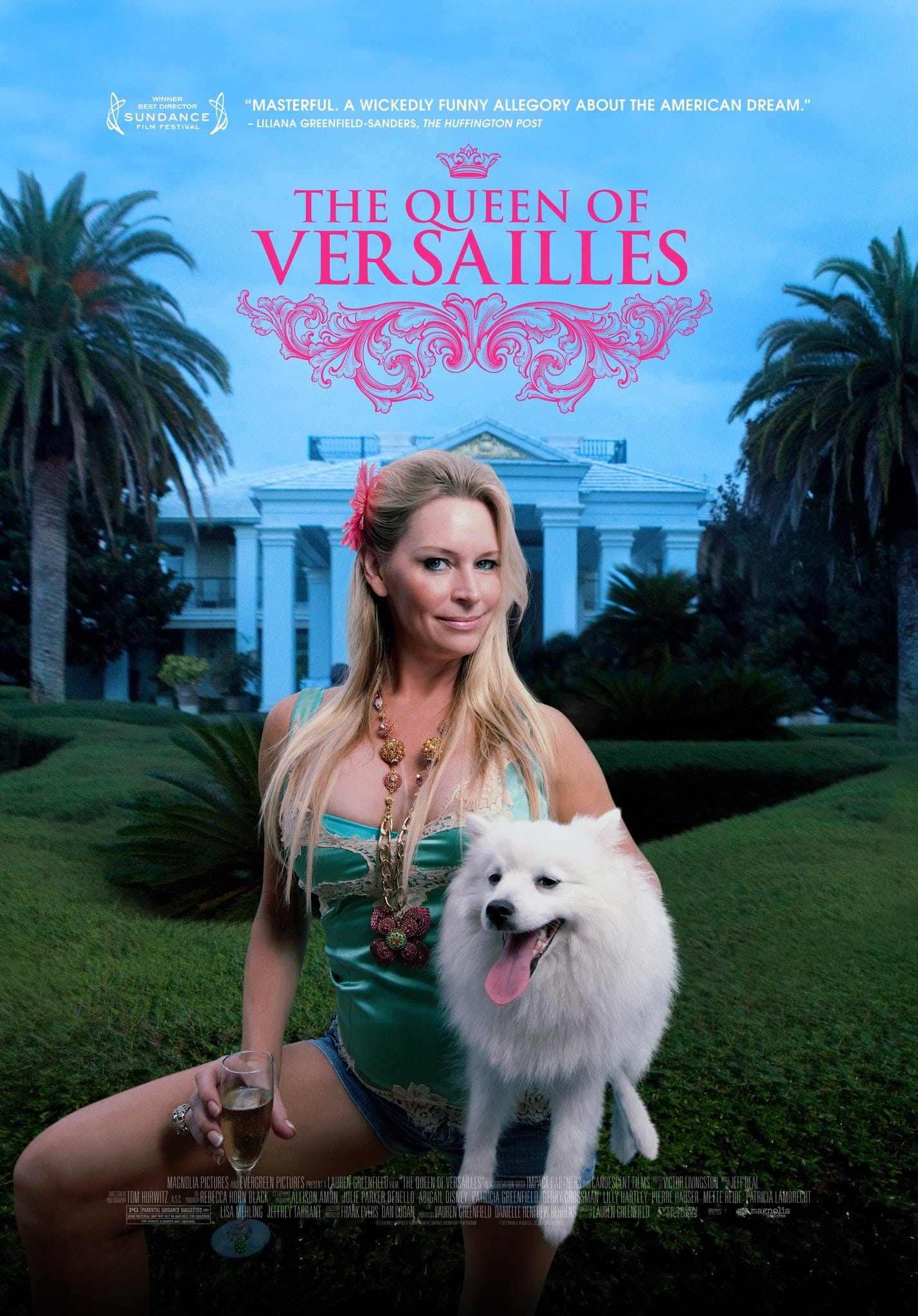
The Queen of Versailles is a 2012 documentary directed by Lauren Greenfield. It follows billionaire timeshare mogul David Siegel and his former beauty queen wife Jackie as they begin construction on a 90,000-square-foot Florida home modeled after the Palace of Versailles, only to watch their empire unravel when 2008 hits.
How quickly I forgot what that era actually looked like. Low-cut jeans. Sperrys. Polos. A housing market built on spectacular levels of nonsense. No money down loans. Mortgages handed out to anyone who could spell their name because denying a loan based on income felt impolite. It was racist to deny a loan to someone of a different race, as they didn’t have the income to support the loan either. The original DEI started in the housing crisis. A fifth mortgage was approved for someone because housing only goes up, and everyone always pays. David Siegel built the largest house in America while already living in a mansion with a beauty queen wife twenty years younger than him. This was just another day back then.
Siegel made his fortune in the timeshare business. A product specifically designed to leach money from middle-class Americans on vacation, many of whom eventually have to hire attorneys just to escape the contract. The documentary treats him as a sympathetic figure. That is somehow the most 2008 thing about it.
But here is what the documentary really is. It is a time capsule of what happens when an entire society confuses leverage for wealth and mistakes rising asset prices for prosperity. The Siegels did not build an empire. They borrowed one. And when the tide went back in, we saw who had clothes on.
The housing bubble of 2008 was never actually fixed. It was transferred. The pain that should have reset the system was papered over with bailouts, zero interest rates, and quantitative easing until the everything bubble replaced it. Stocks, real estate, private equity, venture capital, and now AI infrastructure are all inflating simultaneously on the same cheap money logic that built the Palace of Versailles in Orlando.
Nobody was punished. The bankers kept their bonuses. The system absorbed the loss and moved on.
Here is the number worth sitting with. By the end of 2008, only 8% of mortgages were delinquent. Eight percent. That small a number nearly took down the entire global financial system because everything was so deeply interconnected and leveraged against everything else.
Where are we at today? The same spot. Sitting in the middle of a bubble that AI only needs to put 8% of white-collar workers out of a job to produce the same result. Not half. Not a quarter. Eight percent. 2 out of 25 people. The same threshold that almost ended modern finance applied to the white-collar workforce that services the debt, buys the homes/cars, and pays the taxes that hold the everything bubble together.
When it seems like the party will never end, that is when it’s closing time…
Time will tell.
2. HVAC Backlog
Building things is hard. You get in your car every day, hit the gas pedal, and never once think about what it takes to turn steel, plastic, aluminum, and rubber into something that drives down the road. One airbag sensor, five or six parts, can prevent any vehicle from getting off the assembly line. One little sensor in a vehicle with millions of parts sourced from all over the world, and the whole thing sits in a lot until it arrives.
Americans have had it easy for too long. Water comes from the faucet. Electricity comes from the wall. Food comes from the store. Cars come from the dealer. We have forgotten the hundreds of thousands of moving parts behind every single one of those processes.
Every complex system we rely on was built by two kinds of people. The engineers who designed the sensors, valves, gaskets, wires, switches, nuts, and bolts. And the builders who actually had to put the shit together to make it work — the electricians, HVAC guys, plumbers, what is left of manufacturing workers, and mechanics. The people who use their hands and tools to build shit that allows things to function in the real world. We will call them the specialists.
America is losing all of its specialists.
We spent a generation telling young men to go into finance instead of building things. Finance is sexy. Put on a suit, get in a nice car, head to the skyscraper. Being a plumber and literally getting shit to roll downhill was not exactly aspirational. But ask yourself who will be making the real money over the next few decades. The guys directing shit downhill. That’s not discrediting plumbing, it’s necessary work. And they will make tenfold more money than the accountant whose job AI will replace in two years.
Try getting someone to work on your house and let me know how it goes. I have been trying to get an HVAC company out for four months to do some ductwork. I called three different places. The first never called back after I texted and called. The second answered and told me to call back in the slow season, and they will consider it. The third received two voicemails and multiple calls before I finally sent an email, and got this back at 12:56 am:
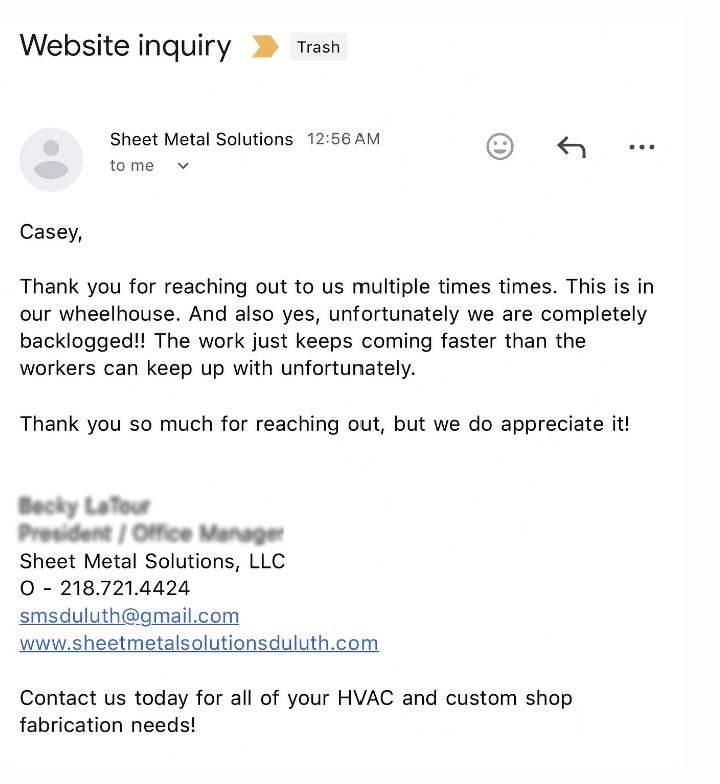
“The work just keeps coming faster than the workers can keep up with.”
That one sentence from an HVAC company at one in the morning is a more honest assessment of America’s infrastructure crisis than anything produced by a congressional committee this year. I can live without my ductwork for a few more months. But can America stay competitive without a complete revamp of its electrical grid in the next few years? The answer requires the same specialists nobody wanted to become, and the backlog is only getting longer.
It doesn't matter whether it is HVAC, electricians, construction workers, or the materials they need to work with. We are in trouble. And the people who could fix it are booked.
I posted this on X recently, and it sums up the scale of what we are actually facing:

TWENTY YEARS. Zero net progress on the grid. And we are now asking that same grid to power the AI buildout, the EV transition, the robotics revolution, and the reshoring of an industrial base we spent forty years dismantling. All of it needs to happen at the same time. All of it needs to be built by specialists we do not have enough of. All of it needs to be financed at the highest interest rates in a generation.
I hope you like inflation. It is not going anywhere.
Time will tell.
3. Citadel Buys Situational Awareness’s Stock Portfolio After Big Losses in AI
Citadel Buys Situational Awareness’s Stock Portfolio After Big Losses in AI —WSJ 07/30/3036
Situational Awareness, the once-highflying AI-focused hedge fund, sold the bulk of its stock portfolio to Ken Griffin’s investment firm Citadel after suffering deep losses, according to people familiar with the matter.
It marks a sudden downfall for Situational, led by former OpenAI employee Leopold Aschenbrenner. It had amassed well over $20 billion in assets under management since its founding just around two years ago, making it one of the fastest-growing firms in years. Aschenbrenner, who is in his mid-20s, was seen by some as an AI oracle, with other investors closely tracking his firm’s movements as it placed big, leveraged bets.
As investors shed positions in artificial-intelligence related stocks, Situational was under pressure to raise cash, either through sales of holdings or new capital commitments, to meet margin-call demands from its lenders, some of the people familiar with the matter said.
In 2007, a handful of overleveraged hedge funds started quietly blowing up six months before anyone used the word crisis. Bear Stearns had two funds collapse in June 2007. Most people shrugged it off. Sixteen months later Lehman Brothers was gone, and the global financial system was on life support. The dominoes always start falling before anyone connects them.

Leopold Aschenbrenner runs a concentrated AI stock portfolio called Situational Awareness, built around the thesis that AI is the most important technological development in human history and the companies enabling it will generate returns that justify dumb valuations. It may be a crazy thesis, but it is the thesis driving the entire market right now, and it made him billions of dollars at one point.
It is also the thesis that just got him hunted.

Citadel, one of the most sophisticated trading operations on the planet, acquired Aschenbrenner’s portfolio after it suffered significant losses. The details matter more than the sequence. A concentrated leveraged AI fund ran into trouble. The market smelled blood. Short sellers targeted his positions with the kind of coordinated aggression that only happens when someone is known to be forced selling. Once that starts, it does not stop until the position is gone or the fund is.
This is what overleveraged looks like in a market priced for perfection. Everything works until it doesn’t. And when it stops working, the exit is always smaller than the entrance.
One fund is not a crisis. But one fund is how every crisis starts. In 2007, the funds that blew up first were not the biggest names. They were the most exposed. The biggest names came later. After the contagion had time to spread through every interconnected position on Wall Street.
The AI financing ecosystem we covered earlier in last month’s letter is built on the same overleveraged logic:
